If you are a US resident returning from most countries, you can bring back $800 worth of goods without paying any duty — that is the personal exemption, it includes gifts, and it renews each trip provided you have not claimed it in the past 30 days. Alcohol and tobacco sit under separate quantity limits inside that number, and everything above the exemption either pays duty at the border or falls into a flat-rate window that is often cheaper than you fear.
Everything here follows guidance published by US Customs and Border Protection, current as of early 2026; the agency's Know Before You Go material is the controlling source and it changes occasionally, so verify before a big purchase. We have no personal border stories behind this — it is a rules roundup — and it publishes information, not legal advice.
What counts against the $800?
Almost everything you acquired abroad and are bringing back for yourself or as gifts: clothing, electronics, art, food within agricultural rules, souvenirs. Things that do not count: personal effects you took with you and are bringing home — the camera in your bag when you left is not a dutiable import when you return — and items shipped home separately, which follow their own mailing rules and generally do not ride on your personal exemption at all.
The exemption is per person, and families traveling together can pool it: two adults and two children returning together command $2,000 of combined allowance, and a laptop bought for a teenager counts against the family pool the same as anything else. A stroller for the baby you brought along is a personal effect, not a purchase.
What are the alcohol and tobacco limits?
Inside the exemption, most returning travelers may include one liter of alcohol — the federal ceiling regardless of the exemption's size, though some state limits run lower — and a set quantity of tobacco, on the order of 200 cigarettes and 100 cigars, with the usual catch that Cuban cigars remain restricted regardless of quantity. Alcohol above one liter is not automatically seized: you declare it, pay duty and internal revenue tax on it, and walk. Undeclared, it is a different conversation.
What happens if I go over $800?
The next slice, from $800 to $1,900, can be handled at a flat 3 percent duty rate on the whole overage — a deliberately simple system. Beyond that, standard duty rates apply by category, and some run high: certain textiles and watches are where the flat rate stops feeling friendly. Practically, the 3 percent window means overshooting by $200 costs about $6 — paperwork and a ten-minute secondary inspection, but not a financial disaster. Overshooting by $4,000 on watches is another category of afternoon.
What about gifts for people back home?
A note on shipping instead of carrying: goods mailed home do not use your personal exemption. Packages enter under separate postal and courier rules with their own de minimis treatment, and travelers who ship a haul and also declare a full carry-on are running two parallel processes with two sets of paperwork. If the plan is to buy heavy, price the shipping duty first — sometimes the suitcase wins, sometimes it very much does not.
Gifts count inside your $800 as a returning resident. The famous $100 gift allowance belongs to a different traveler: nonresidents passing through the US may ship or carry up to $100 in gifts to people inside the country, marked as such, unwrapped, per person receiving them. If you live in the US, do not build a shopping trip around that number — it is not yours.
How does the declaration actually work?
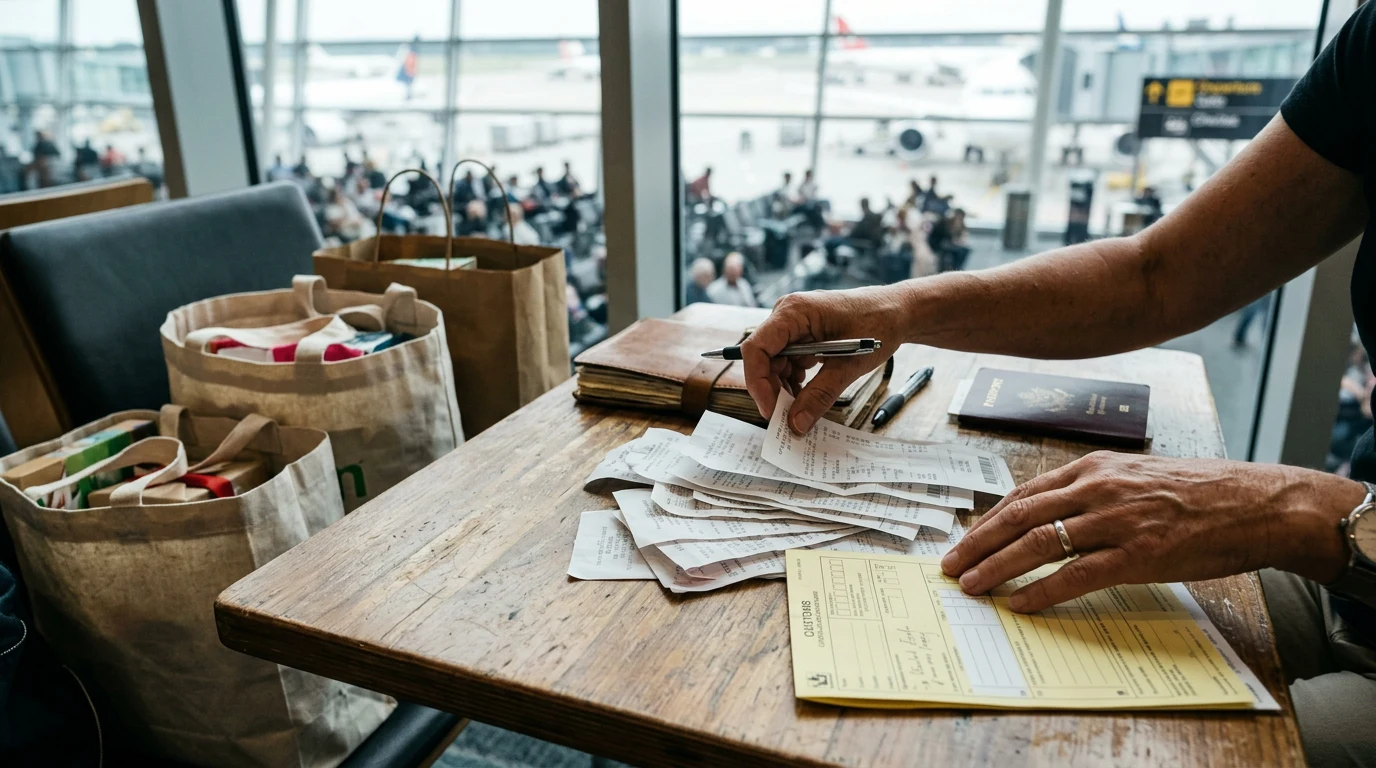
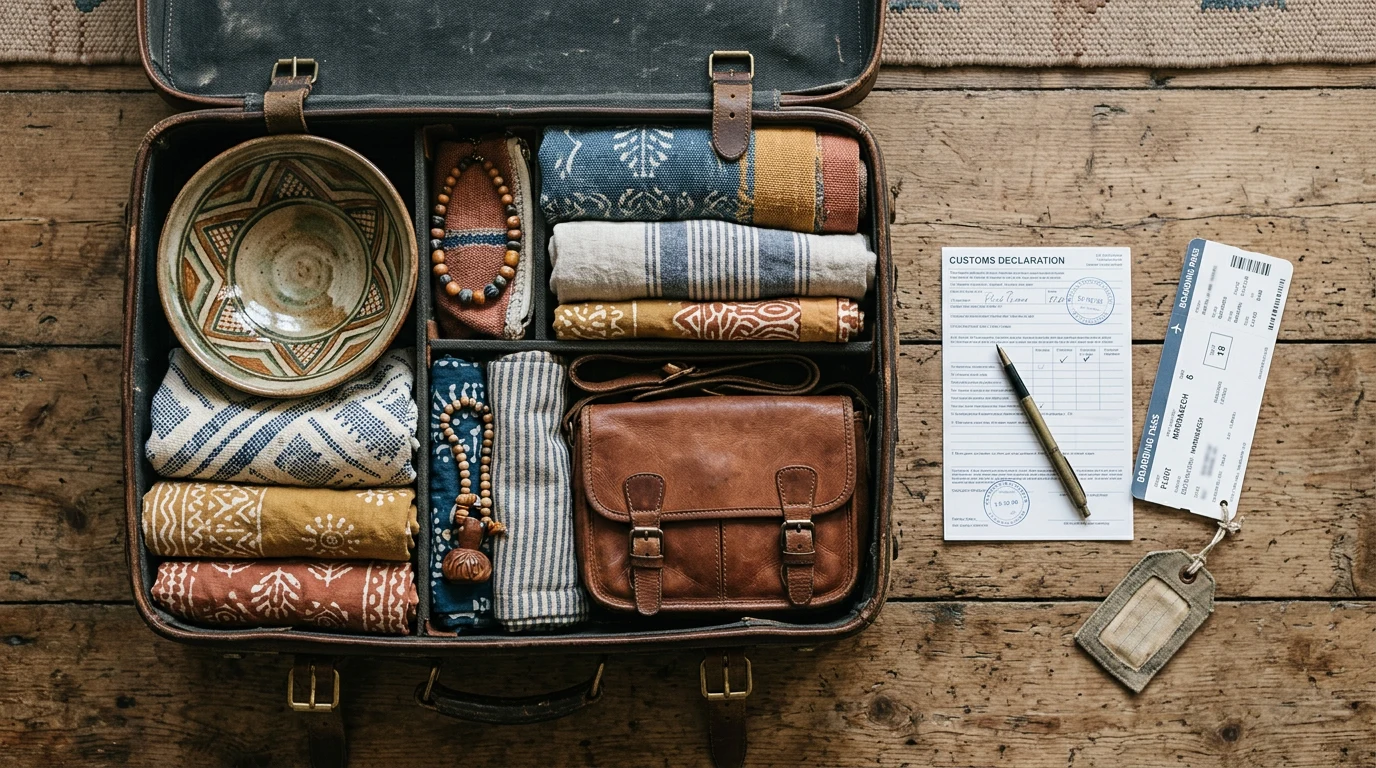
You declare at the kiosk or on the paper form on arrival, listing the total value of goods acquired abroad, then answer the agricultural questions — fruits, vegetables, meats, most of which are prohibited or restricted no matter their value. Declare first, always: failure to declare can forfeit the goods and carries penalties, while an honest declaration of an overage costs the duty and a few minutes. CBP officers can examine any bag, and the receipts in your pocket answer most questions before they become questions.
- Keep foreign receipts accessible — they settle valuation disputes on the spot.
- Pack purchases where you can reach them; secondary inspection with a packed car is a longer conversation.
- Food gifts: cheese and many packaged goods pass; fresh fruit and most meats do not — declare and ask.
- Remember the 30-day lookback if you cross the border often.
The most expensive line at customs is the one you did not declare. The duty on an honest overage is almost always smaller than the penalty on a discovered one.
Who needs to care most?
Frequent crossers — the 30-day exemption rule changes the math for weekly shoppers, and land-border rules have their own lower thresholds. Anyone flying home from a watch or textile-heavy trip should price the category duty before buying. And everyone bringing food: the agricultural rules are absolute, value-independent, and the source of nearly all the genuinely sad confiscation stories at the arrivals hall.