Japan's tax-free shopping system knocks off the 10 percent consumption tax when you spend at least 5,000 yen in a single store on a single day — but only if you show your actual passport at the register before paying, and only if you take the goods out of Japan with you. That is the whole deal in one sentence. The parts travelers trip over are the split between "general goods" and "consumables," the sealing rules for cosmetics and snacks, and the spot check customs officers can run at the airport on the way home.
This is a sourced roundup of how the system worked as of late 2025, based on rules published by Japan's National Tax Agency and retailer guidance from major department store chains; we have not run the process ourselves. Tax and procedure questions deserve a check against the current official rules before you plan a purchase around them, and this publishes information, not tax advice.
How does the exemption actually get applied?
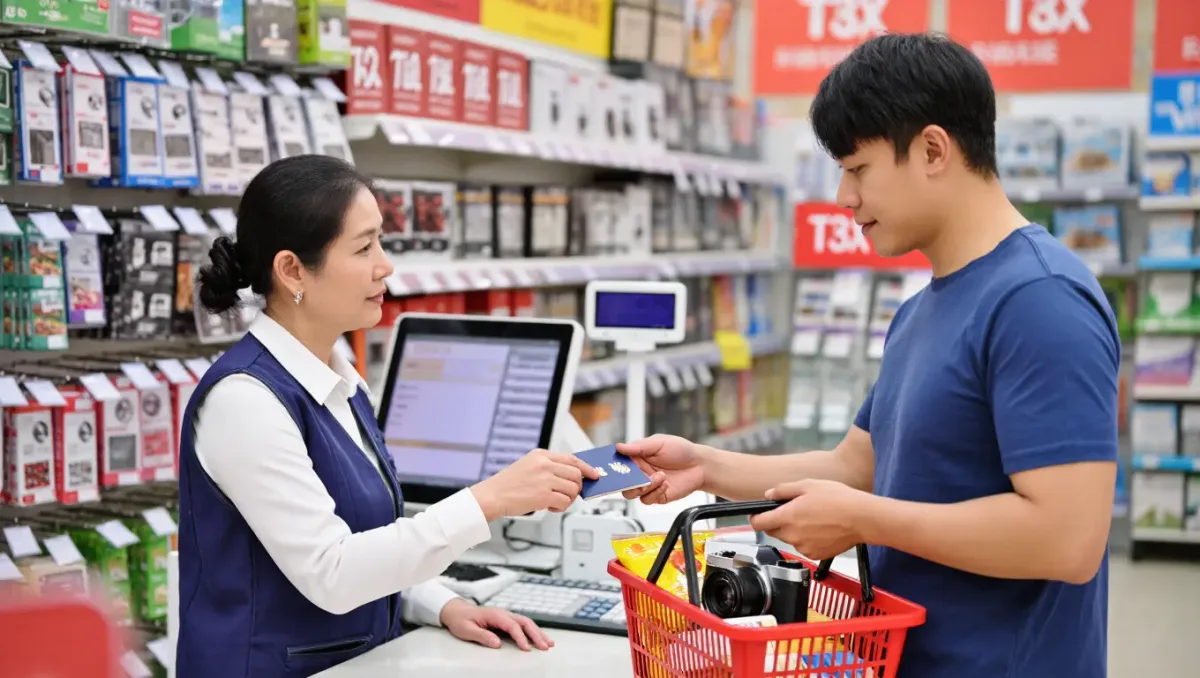
In most stores that participate — big electronics retailers like Bic Camera and Yodobashi, department stores, drugstore chains — the 10 percent tax is simply not added at the register. You pay the shelf price minus tax, the clerk scans your passport, staples a "Record of Purchase" slip into it, and you are done. There is no airport refund desk to queue at afterward, which is the single biggest difference from Europe's refund model.
The threshold is 5,000 yen before tax per store per day. Stores will not combine receipts from two visits, and most will not combine purchases across a chain's branches — buy at the Shinjuku Bic Camera, come back to the Shibuya branch the next morning, and each receipt is measured separately. If you are at 4,400 yen, one more small item pushes you over; if the clerk says you are under, no amount of asking moves the number.
What is the difference between general goods and consumables?
The rules split your basket in two. General goods — electronics, clothing, ceramics, knives, toys, luggage — need to hit 5,000 yen, and once you have left the store you can use them in Japan. Wear the coat to dinner. The fine print says the goods are for taking out of the country, not resale, and the purchase slip in your passport is theoretically checkable at departure.
Consumables — food, snacks, alcohol, cosmetics, medicine, anything you "use up" — have two extra layers. First, they must also total at least 5,000 yen but cannot exceed 500,000 yen in a single transaction. Second, they must stay unused. Stores seal consumable purchases in a bag, sometimes stapled, sometimes taped with a tamper-evident sticker, and you are not supposed to open it until you are home. Eating the KitKats in your hotel room makes the purchase technically non-compliant — a rule with plenty of quiet violations and, occasionally, a fine if customs inspects.
Related stories: Seoul's K-beauty shopping circuit: where to buy, and how the tax refund actually lands · What you can actually bring home to the US without paying duty.
What do you need to show at the register?
Your physical passport with the short-term visitor landing sticker. A photo of your passport on your phone does not count, and neither does a copy. Since 2020, Japan stopped letting travelers buy tax-free under someone else's passport or aggregate a group's purchases onto one document — everyone's basket is measured against their own passport. If you are a resident of Japan, a student visa holder, or anyone staying past the short-term window, you do not qualify at all, and clerks do check the residency period stamp.
Where does the system fall apart?
Three places, in practice. Small independent shops often do not participate at all — there is no obligation, and a boutique in Yanaka may simply sell at the listed price. Convenience stores mostly skip it too, since the threshold is above a typical konbini run. And the paperwork lives in your passport: those stapled slips stay in the document until you leave, and you hand nothing in at the airport in the normal flow — customs can, and does, do spot checks of passports against luggage, mostly hunting for consumables that were opened or resold. Keep the seals intact until you are through the door at home.
Is the system about to change?
Yes, in direction if not in date. Japanese authorities have been moving toward a refund-at-departure model — you pay the full taxed price at the register and claim the refund at the airport — to close loopholes, and retailers have been preparing their systems for it. As of late 2025 the at-register exemption was still the standard experience at major chains, but this is exactly the kind of detail to verify the week you travel, because a mid-trip rule switch would change your checkout math.
How much is it actually worth?
Ten percent, straight line. On a 60,000 yen camera body that is about 6,000 yen — roughly $40 — which is real money, though it shrinks next to price differences: some electronics are cheaper at home, and luggage fees for the extra bag can eat a snack haul's savings. Where the exemption shines is categories with uniform global pricing — cosmetics, prestige watches, mid-range cameras — where 10 percent is pure margin back to you. Do the arithmetic at the shelf, not at the register.
A store that does not display a "tax-free" sign almost certainly is not one — there is no negotiating your way into the exemption after the receipt prints.
Quick checklist before you fly home
- Passport slips still stapled in, seals still sealed on consumables.
- Nothing consumed, nothing gifted away inside Japan.
- If you packed consumables in a checked bag and customs wants a look, be ready to open it at the inspection counter.
- Battery-powered electronics in carry-on, per normal airline rules — the tax-free sticker changes nothing there.