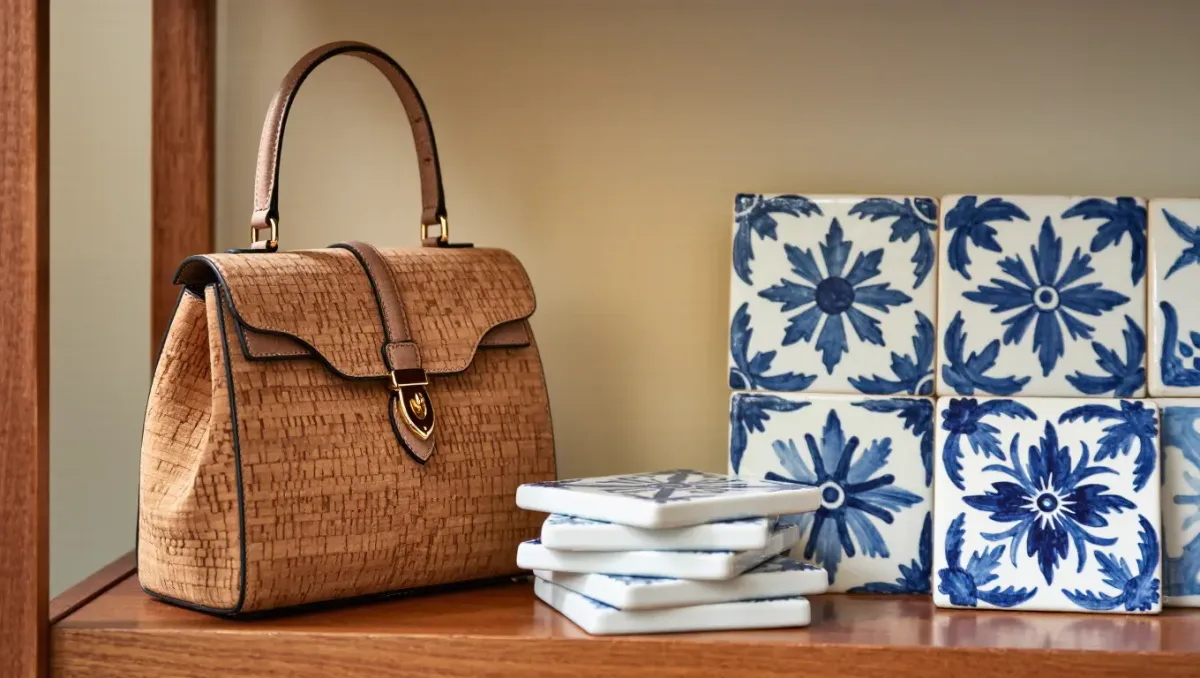
Buy these four things in Portugal and you cannot go wrong: cork — bags, wallets, planters — which grows and is manufactured there at prices far below home retail; azulejo, the painted ceramic tiles that dress entire building facades; conservas, the beautifully tinned sardines that have turned pantry goods into design objects; and Viana-style gold filigree from Porto's jewelry tradition. Everything else — the magnets, the towels, the printed T-shirts — is the same souvenir you can buy in any port city on the continent.
This is a sourced roundup based on Portugal's manufacturing traditions and shop guidance as of mid-2026, not a documented shopping run; prices vary by shop and season. If you are bringing wine or cured meats back to the United States, check US Customs and Border Protection's agricultural and alcohol rules before you pack. The standing note: information, not advice.
Why is cork such a good buy?
Portugal produces roughly half the world's cork, and the harvest comes from cork oaks stripped every nine years or so — an industry the country effectively owns. That supply chain shows up in prices: a cork handbag that retails in the US at three figures often sits in Lisbon or Porto shops for a fraction of that, in grades and textures the export market never sees. Check the seams and lining as you would any bag; cork itself is water-resistant, durable, and lighter than leather. It is the rare souvenir category where the home-country advantage is structural, not tourist pricing.
What is the story with the tiles?
Azulejo are everywhere — on churches, metro walls, entire housing facades — and the souvenir version ranges from antique single tiles with documented provenance to fresh-painted reproductions with painted-on patina. The honest buys: contemporary tiles from working studios, where you pay for the painter's hand and know exactly what it is; and patterned reproduction panels that say "hand-painted in Portugal" truthfully. Buy documented antiques only with paperwork. Framed single tiles pack flat in a suitcase; larger panels should be shipped, and reputable studios arrange it routinely.
Are canned sardines a real souvenir or a joke?
A real one. Portugal's conserva houses have spent a decade turning tinned fish into gift goods: vintage-labeled sardines from named fishing years, hand-wrapped paper, color-coordinated rows that look like a sweetshop. Quality tins cost a few euros to well over ten, weigh little, survive transit, and — the practical traveler's favorite — clear customs as commercially packaged food in most cases. The fish are typically sardine season catches from named ports; the labels alone are wall-worthy. Eat, do not collect: the point of a sardine is dinner.
What about the gold — and the rooster?
Porto and the northern tradition produce Viana hearts and filigree work in gold and silver — genuine jewelry craft with fixed-price goldsmiths' shops, assay marks, and prices that track the metal market. Buy from established jewelers, ask for the hallmark, and keep the receipt for insurance and customs valuation. The Barcelos rooster, by contrast, is folklore in ceramic form: cheerful, iconic, and priced anywhere from honest to absurd. Buy the one that makes you smile and pay the fair tag price — there is no investment thesis on roosters.
Can you bring home the wine?
Port and Madeira travel well and are the drink souvenirs that justify suitcase space. US residents may include one liter of alcohol in the duty-free exemption, with more after duty — the mechanics are the border's, not the shop's. Some US states enforce lower personal-import limits than the federal rule, which surprises returning travelers at their own doorstep. Shipment is possible through licensed importers at real cost; hand-carry is simpler up to the limits.
- Cork: best value category; check linings and seams.
- Azulejo: buy working-studio pieces; insist on paperwork for "antiques."
- Conservas: cheap, packable, customs-friendly; look at fishing-year labels.
- Filigree: established goldsmiths, hallmarks, receipts.
- Wine: one liter duty-free for US residents; state limits can be lower.
The test for any Portuguese souvenir is simple: can it be made anywhere? Cork, tiles, tins, and filigree cannot. A magnet can.
A word on where to shop, because it changes the arithmetic: the airport is the worst venue for all four categories, the tourist-axis streets of central Lisbon run 20 to 40 percent above neighborhood shops for identical cork goods, and the working-studio districts — or northern workshops for filigree and ceramics — price for locals. An hour of walking between shops, phone calculator open, is worth more than any bargaining technique in the country, and Portugal does not require the performance anyway: tags here mean what they say far more often than not.
Who should buy nothing?
Anyone flying a budget carrier with strict baggage fees on the last leg — cork bags weigh little, but tiles and wine do not, and a suitcase of ceramics plus overweight charges can exceed the value of the haul. Lisbon and Porto will still be there on the next trip, and the sardine labels keep remarkably well in your camera roll.