A farm to table menu sells provenance. The phrase has no settled definition, so the claim is only as honest as the kitchen printing it. The tell is traceability. A kitchen that really sources nearby can name the farm, the month, and why the menu changed. The rest are selling a mood.
This explainer leans on documents, not vibes. The USDA Economic Research Service defines what local means to lawmakers. An encyclopedic history of the movement keeps its fraud record. Use both as a checklist for the next menu that name-drops a farm. The order runs from promise to proof. For related coverage, see The service charge on your Paris bill, explained: what "service compris" actually covers.
What the phrase actually promises
Farm-to-table is a social movement. It promotes serving local food at restaurants and school cafeterias, preferably bought straight from the producer, according to Wikipedia. A winery, ranch, fishery or farmers market can all count. The same entry holds the useful warning. Restaurants often cannot source everything locally, so only some dishes or ingredients end up labelled local. Traceability, or knowing where your food comes from, is the celebrated core. That standard doubles as the test for any menu, and it is the thread running through this piece. The documented history of farm-to-table covers both the promise and the cheating.
There is no settled distance for local
How far is local? The USDA's Economic Research Service gave the honest answer in a 2010 Amber Waves feature. Local foods are produced near their point of consumption, but no consensus exists on what distances count. Federal law adds a range, not an answer. Under the 2008 farm bill, a farm product counts as local or regional if it travels less than 400 miles or stays inside its home state. Vermont goes further. State law there requires local items to originate within 30 miles of the point of sale. So a kitchen two towns from the farm and a truck moving produce 390 miles can print the same word. The USDA feature on local foods carries both numbers.
The fraud record is documented, not theoretical
The cheating is on the record too. Investigations by the Tampa Bay Times and San Diego Magazine found widespread fraud in farm-to-table claims. Wikipedia's entry lists the patterns. Some restaurants claimed to buy from a farmer who denied ever selling to them. Some menus still named suppliers that had closed years earlier. Some dishes billed as wild caught were not. The fallout included lawsuits from farmers and consumers, plus enforcement actions by government agencies. Skip the habit of treating one named farm as a guarantee. The documented failures involved exactly that kind of single-name menu. This connects to our earlier piece, Family friendly restaurants near me: Family friendly restaurants that parents actually enjoy too.
How to check a claim before you order
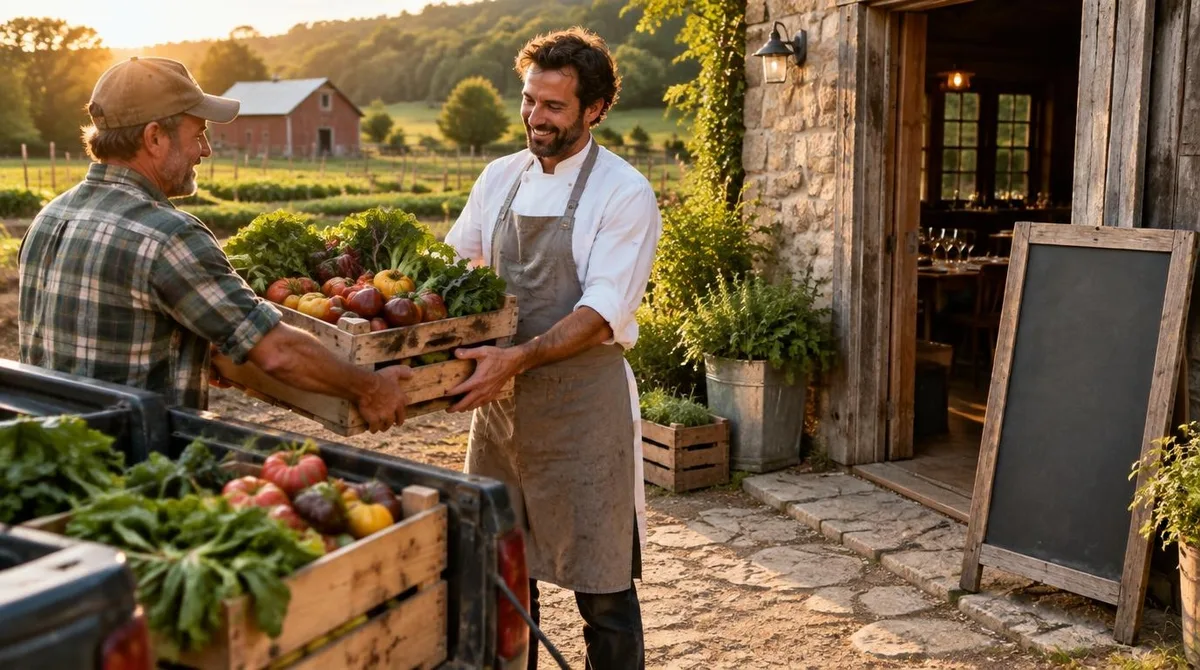
Four checks sort a serious kitchen from a menu writer. First, ask which farm, and expect a name, not a region. Second, check the season; the investigations documented restaurants serving items their named farmers never grew that month. Third, watch for turnover. A menu that never changes sits awkwardly beside real local sourcing. Fourth, prefer direct channels. Farmers markets and community-supported agriculture appear in the movement's own definition as direct paths from producer to plate, and some restaurants sell at the same stands. Chains get credit for scale, not for locality. Wikipedia documents the salad chain Sweetgreen working with more than 500 farmers, which is a regional model, not a neighborhood one. If the farm question earns a shrug, order the dish that needs no provenance story and move on.
Conclusion: receipts beat rhetoric
The movement's own standard settles it. A kitchen that sources nearby can trace the plate to a place and a month. The USDA's definitions show why vague distance claims deserve doubt. The fraud record supplies the stakes. Ask the farm question, expect a specific answer, and let the menu's turnover make the closing argument. The next menu that name-drops a farm will then be a fact check, not a mood.