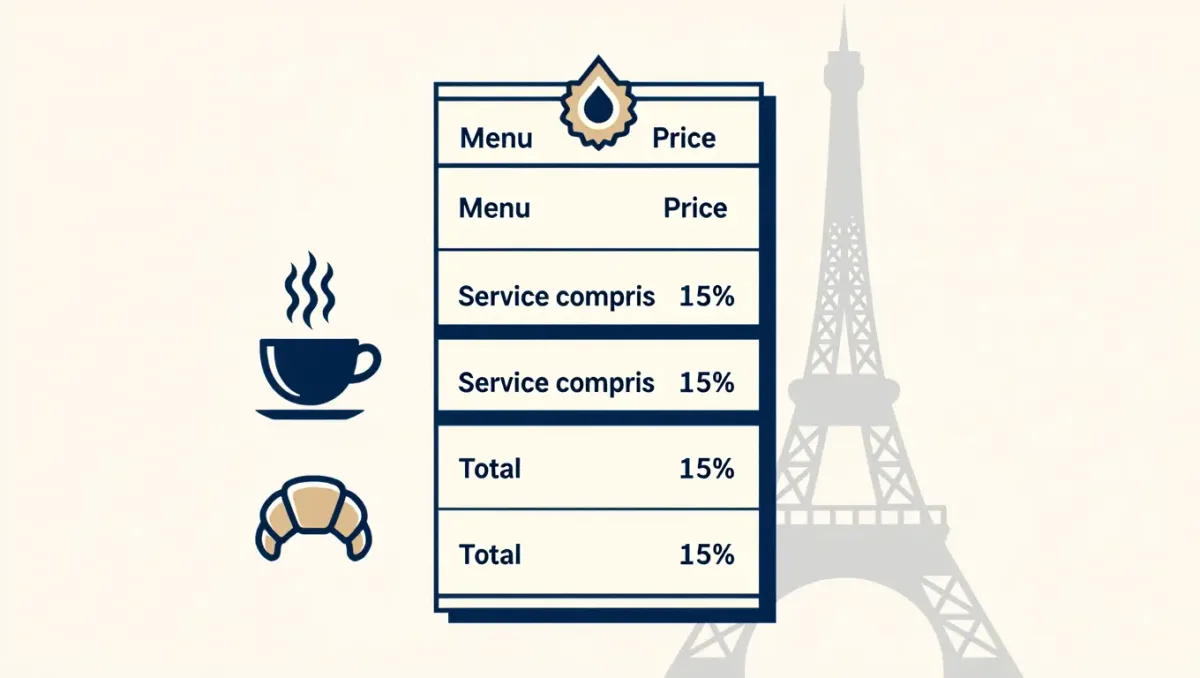
That line on your Paris restaurant bill that reads "service compris à 15%" means exactly what it says: French law requires menu prices to include service, so the bill is the complete payment and no additional tip is owed. The practical rule as of early 2026: pay the printed total, and if the service earned it, round up or leave one to five percent in coins — a gesture, not a duty.
This is a sourced explainer of French pricing law and Parisian dining mechanics, drawn from published consumer rules and long-standing industry practice, not a diary of meals. The legal part is fixed; the tipping-coin part is custom, and the amounts below reflect what French sources describe as current habit.
What the law actually requires
French law sets a minimum service component inside menu prices — 15% — which restaurants must include and display, the practice behind the words "service compris." Servers in France are salaried employees with paid leave and social coverage, not tipped workers; there is no tipped minimum wage and no economic gap the way there is in the United States. The 15% isn't a gratuity you can adjust — it's built into the menu price whether you see it printed or not, which is why a Paris bistro dish can look expensive next to an American one until you compare the final bills.
So do you tip in Paris at all?
The honest answer: a little, optionally, in specific situations. The custom French sources describe consistently: leaving the small change from a casual café bill; one to two euros at a bistro where you lingered; five percent or so at a nicer restaurant for genuinely good service, often left in cash on the table rather than added to a card payment. Card terminals in France typically don't offer a tip screen the way US ones do — which is the system working as designed, not the terminal being broken.
The bill itself: how Parisian payment works
- You ask for it. The table is yours for the evening by default; the bill never arrives uninvited. "L'addition, s'il vous plaît" is the phrase, and asking for it is how you signal you're done.
- The "couvert" or bread-and-table charge, where it appears, is legal as an itemized line and disclosed on the menu — but it is not a tip and it doesn't replace service compris; it's a separate line for items placed on the table.
- Tourist-district restaurants must, by French rules, display prices with tax included outside and in — a menu without visible prices inside the protection of a historic district is a documented red flag.
Cafés, bars, and the terrace premium
Paris café pricing is a table of its own: the same espresso costs different amounts depending on where you drink it — standing at the counter (le plus cher per sip logic reversed: cheapest), seated inside, or on the terrace, where prices are highest and must be posted. This isn't a scam; the posted price list makes it transparent, and it explains bills that surprise first-time visitors. Service compris applies across all of it.
When a tip is genuinely expected
Nearly nowhere, but the shortlist per French custom: tour guides on free or small-group walks, where tips form a real part of income; hotel porters, around one to two euros per bag; and the coat-check or bathroom attendant in some venues, where a posted tray fee or a euro answers it. Restaurant servers fall outside this list — your coins there are appreciated, not anticipated.
FAQ
Is 15% service included in French restaurant bills?
Yes — French law requires menu prices to include a 15% service component, printed or not. The bill's total is the complete payment.
Should I leave a tip in Paris?
Optionally: leave small change at a café, one to two euros at a bistro, or up to about five percent at a nicer restaurant for genuinely good service.
Why doesn't the card terminal ask for a tip?
French payment terminals generally don't include a tip screen because service is already in the price. Hand extra cash if you want to add something.
Why was my terrace coffee more expensive than the counter price?
Paris cafés legally charge different prices by where you sit — counter, inside, or terrace — and must post all of them. The terrace rate is the top one.