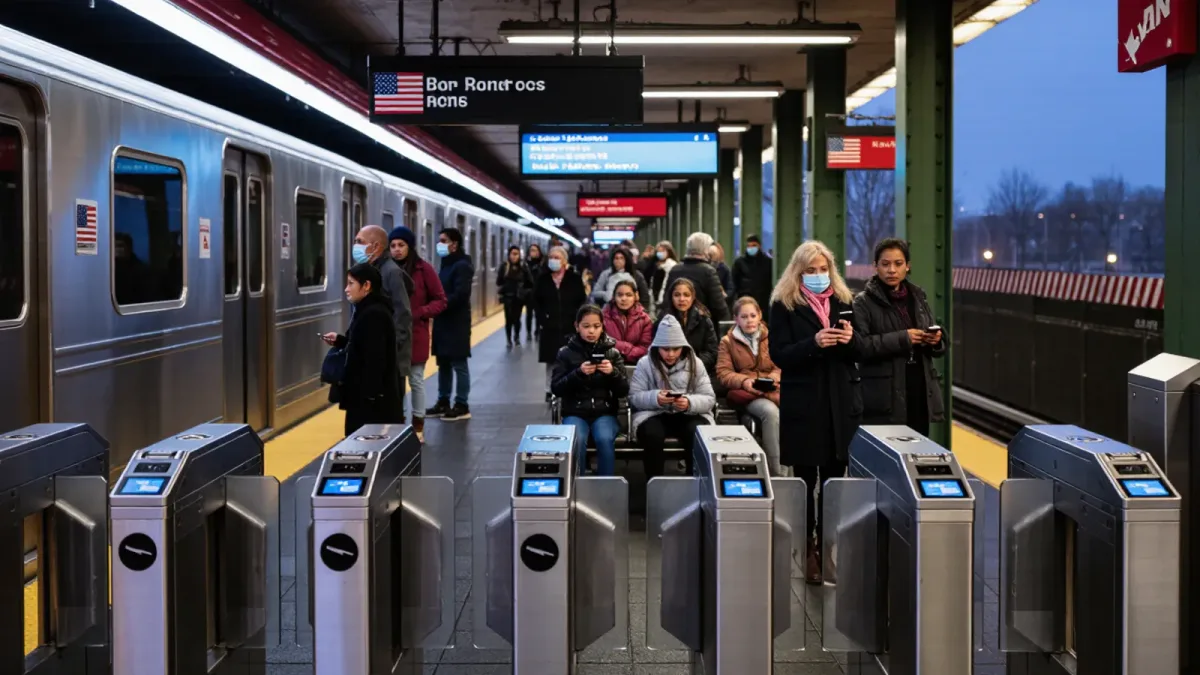
Forget tokens, MetroCards, and machine queues: a first-timer's entire New York subway strategy is to tap a contactless bank card or phone on the OMNY reader at any turnstile and walk through. The base fare sits around three dollars since the 2025 fare adjustment, the system automatically stops charging after you've paid about a dozen fares Monday through Sunday, and transfers to other trains and buses ride free within about two hours. That is the whole system — everything else is geography and nerve.
This is a sourced roundup of MTA fare rules and subway practice as of mid-2026; the MTA adjusts fares periodically, so confirm the current base fare and cap before your trip. Information, not transit-agency gospel.
How does OMNY actually work?
Every turnstile has a black OMNY reader: hold your contactless card, phone, or watch against it until it chirps, and the turnstile releases. The same device must be used for entry and any free transfer, because the system tracks fare capping per device — split your riding across two cards and you never reach the cap. No account or app is required to ride; a free OMNY account exists for receipts and capping visibility, but the turnstile does not care. Reduced fares for seniors and disabled riders run through the reduced-fare program with its own cards rather than the tap flow.
What is the fare cap, and why does it matter?
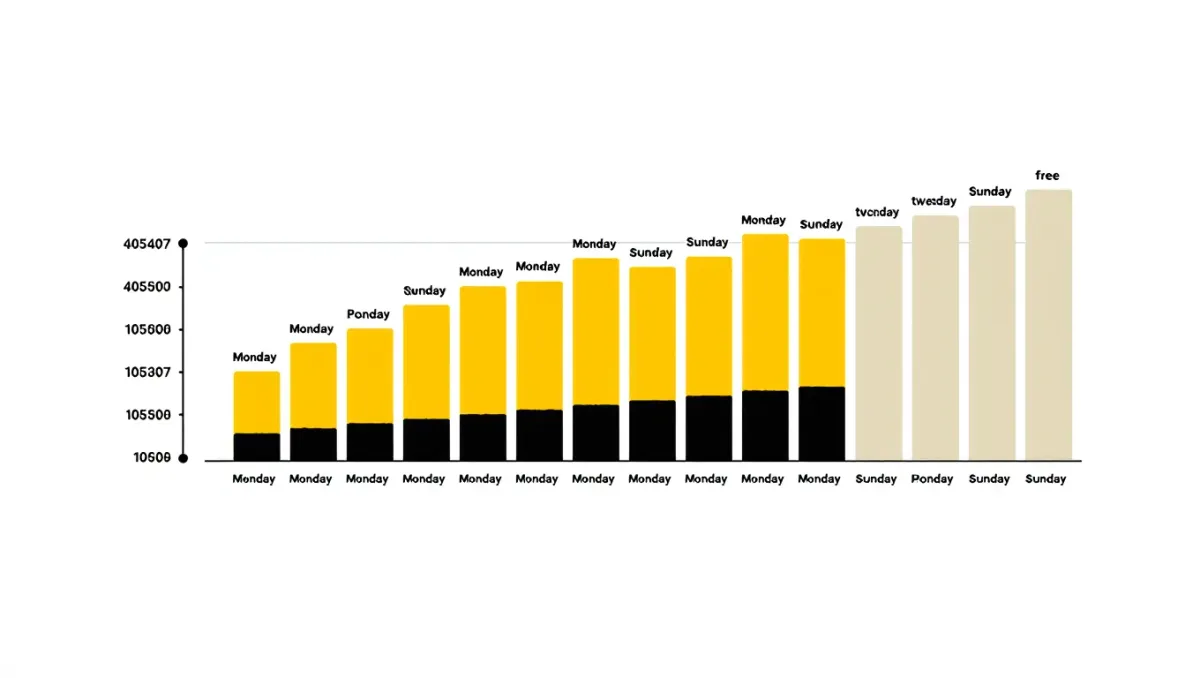
OMNY charges per ride until you have paid roughly a dozen fares within the Monday-to-Sunday window; after that, additional rides are free through Sunday night. For visitors, the cap converts the old decision — pay-per-ride versus a 7-day unlimited pass — into a non-decision: heavy riders hit the cap midweek and stop paying, while light riders never overpay. The weekly unlimited pass still exists at a price slightly above the cap, its advantage being predictability rather than savings. Run one device through the whole trip and the arithmetic manages itself.
How do you pick a train without a nervous breakdown?
New York runs local and express versions of many lines: the big-number circles stop everywhere, the diamond versions skip stops. Signage names the train by its last stop in your direction, so check which end of the line you are heading toward, not just the line letter. Inside the system, downtown and uptown live on opposite platforms — cross them only at designated points, because the staircases between platforms are rarer than tourists hope. And the apps do the heavy lifting: any mapping app with transit mode gives the platform, the direction, and the delay warnings, which is why New Yorkers stare at phones in stations without shame.
What should first-timers actually watch for?
Three things. Rush hour, roughly 7 to 9 a.m. and 5 to 7 p.m., is standing-room-only but safe and fast; off-peak trains thin out, so stand in the middle of the platform near the conductor's car if the station empties. The doors do not wait — they are famously indifferent, and a stretched arm does not reopen them. And buses: tap the same reader on board, with the same free-transfer logic; buses are slower but they cover crosstown distances the grid of trains skips. Select Bus Service routes use off-board readers — keep the paper receipt as your proof of payment, because inspections there are real.
- One card or phone for the whole trip — the cap tracks the device.
- Base fare ~$3; free after ~12 paid rides, Monday–Sunday.
- Transfers free within ~2 hours; same device required.
- Circles stop everywhere; diamonds skip stops.
- Rush hour: ride it. It is the local experience anyway.
The subway's reputation for complexity is a ticketing-era fossil. Since the reader learned to trust your phone, the only real skill left is choosing a platform in the right direction.
A note on late nights, because the subway runs 24 hours and first-timers rarely believe it: service thins overnight to longer gaps and rerouted local patterns, which is when the transit app earns its keep — it will show a bus substitution or an express-running local before the station announcement does. Stations never fully empty, which surprises visitors from cities that shut their systems at midnight, but late-night riding etiquette is its own small craft: wait near the token booth or the middle of the platform, board the car with other people in it, and let the city's insomnia carry you home.
Who should skip the subway?
Nobody who is staying more than a day — but the honest alternatives have their moments. Taxis and car services beat the trains for late nights with luggage, and the Staten Island Ferry is free with the skyline included, which makes it the only commute in America that people ride for fun. Everything else in this city moves on rails, and after two taps you will too.