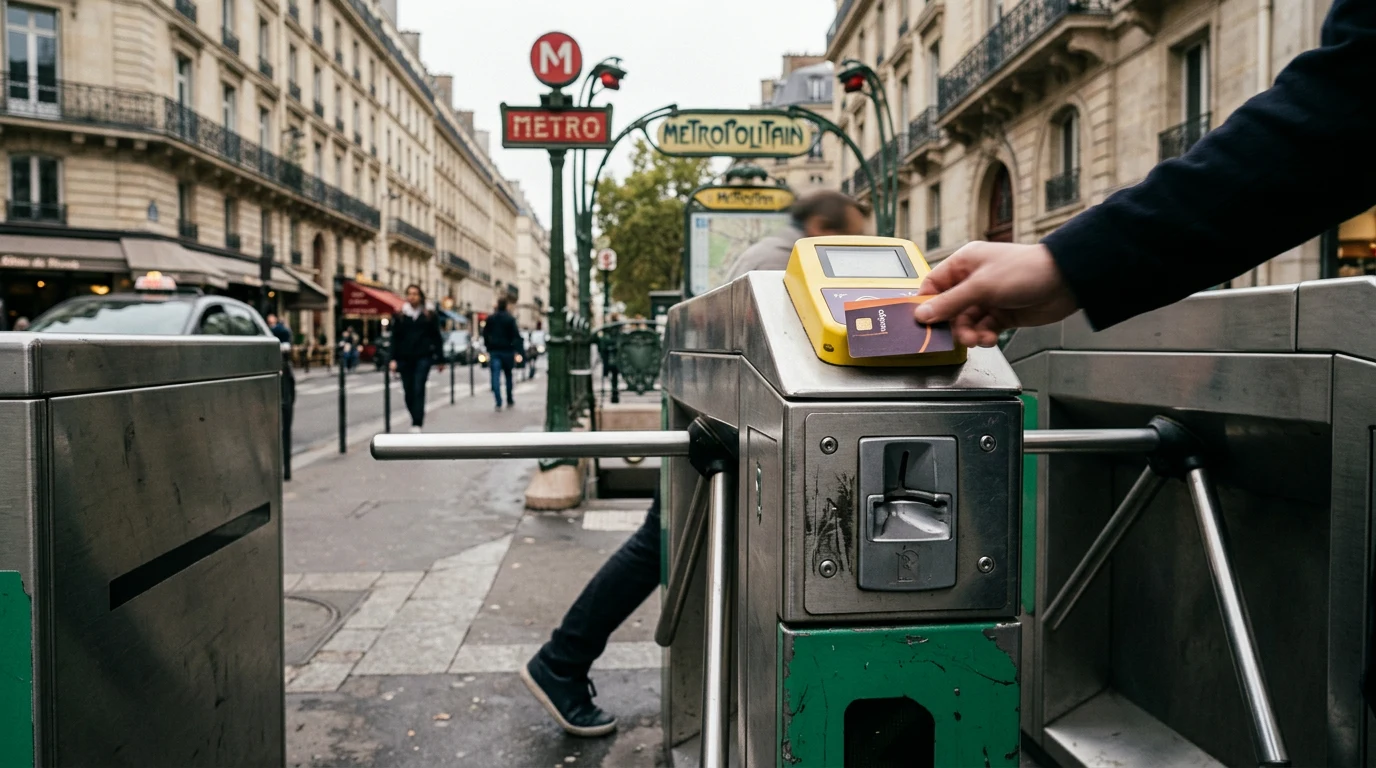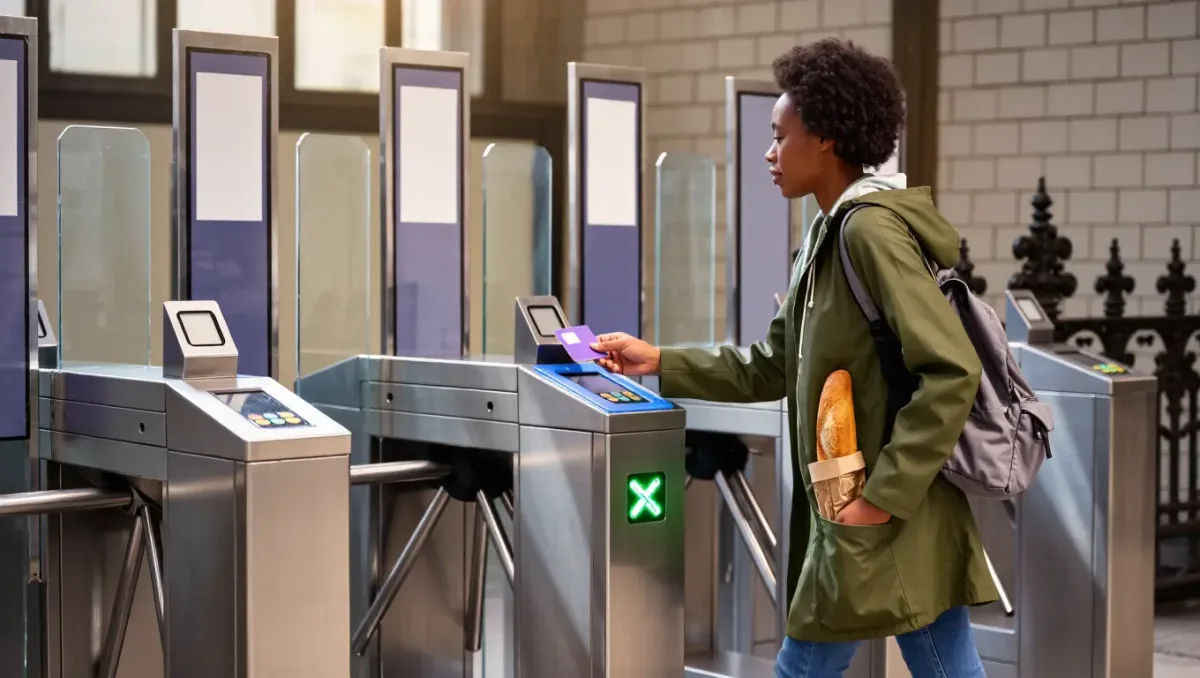
For a short stay in Paris, the answer is one card: buy a Navigo Easy card at any métro station for a couple of euros, load it with single tickets at the flat fare — around €2.50 a ride as of 2025's fare reform — and tap it at every door. The paper carnet of ten is gone, zone tickets are gone, and the flat fare covers the whole central network; only the airports price separately, deliberately, at a much higher airport-specific ticket. That is the entire system in one paragraph, and the rest is avoiding the small print's teeth.
This is a sourced roundup based on Île-de-France Mobilités fare rules and ticketing practice as they stood in early 2026; fares change every January, so verify the current table before your trip. We publish information, not travel-agent advice.
What replaced the paper carnet?
The Navigo Easy card, a purple contactless smartcard sold at station counters and machines, holds single tickets and day passes but not the weekly season pass, which lives on the app or a named card. You tap the card on the purple or blue readers at gates and on buses; transfers between métro and RER within the flat-fare area ride the same ticket, with the usual rule that the ticket stays valid for a continuous trip including connections — exit the gates and the trip is over. The phone route works too: the Île-de-France Mobilités app turns a recent NFC Android phone or iPhone into the ticket itself, which suits travelers allergic to extra objects in their pockets.
What does a ride actually cost?
Under the January 2025 reform, a single ticket costs about €2.50 and covers bus, métro, tram, and the RER within the inner zones — a deliberate simplification of the old zone maze. Connections ride one ticket; a bus-to-bus transfer within a short window counts as one trip under the same validation rules that always governed the city. Multi-ride packs of single tickets loaded on Navigo Easy shave a little off the singles price. Children under four ride free; child fares and passes exist and are asked for at the counter rather than configured at a machine on your first jet-lagged evening.
How much is the airport, and why is it different?
Roissy CDG and Orly sit outside the flat fare on purpose: the airport-specific ticket costs a multiple of the city fare — on the order of €13 to CDG as of the 2025 table — and the same ticketing options apply, including loading the airport fare onto Navigo Easy or buying in the app. The reform folded former separate airport bus fares into this structure, which means the RER B to CDG now costs the same airport ticket as the alternative bus routes — a rare case of Parisian pricing getting simpler. Keep the airport ticket until you are through the exit gates; inspections on the RER are ordinary events.
When does a day pass beat singles?
The Navigo Jour day pass on the Easy card pays for itself somewhere around your fourth or fifth ride. Two museum days with a river crossing and a dinner across town add up fast, and the day pass removes the ticket-buying friction entirely. For a week of real transit use, the Navigo Semaine weekly pass is far cheaper than seven day passes — with the one complication that it is dated by calendar week, Monday through Sunday, which makes a Thursday-to-Thursday trip pay for singles instead. The math is public on the fare table; run your itinerary against it once and the choice is obvious.
What are the mistakes that cost real money?
Riding without a validated ticket is the big one: fines for inspectors run in the tens of euros and multiply for repeat catches, and "the gates were open" is not a defense, it is a description of how the fine happens. Buying singles one at a time on a busy week wastes both money and queue time. And the classic: treating the métro map as a walking map — central Paris is compact, and three of the best distances between museums are twenty-minute walks that beat four connections and a transfer at Châtelet, a station famous for eating itineraries alive.
- One Navigo Easy per person — they are cheap and not shareable.
- Flat fare ~€2.50 covers the central network; airports price separately, ~€13 to CDG.
- Day pass pays off around ride four or five.
- Validate every ride; keep the ticket until you exit.
The 2025 fare reform did visitors one quiet favor: the answer to 'which zones?' is now 'none of them matter to you' — except the airport, which is priced like a separate attraction.
Who should skip the métro?
Anyone staying four days or fewer within walking distance of the Seine's postcard mile may barely need it — Vélib' bikes and shoe leather cover the central grid in good weather. And anyone arriving at CDG with heavy luggage: the RER B involves stairs, crowds, and pickpocket-adjacent jostling at the airport stations; a taxi's fixed fare to the Right Bank is the honest comfort purchase. The métro earns its keep for everyone else, every single day.