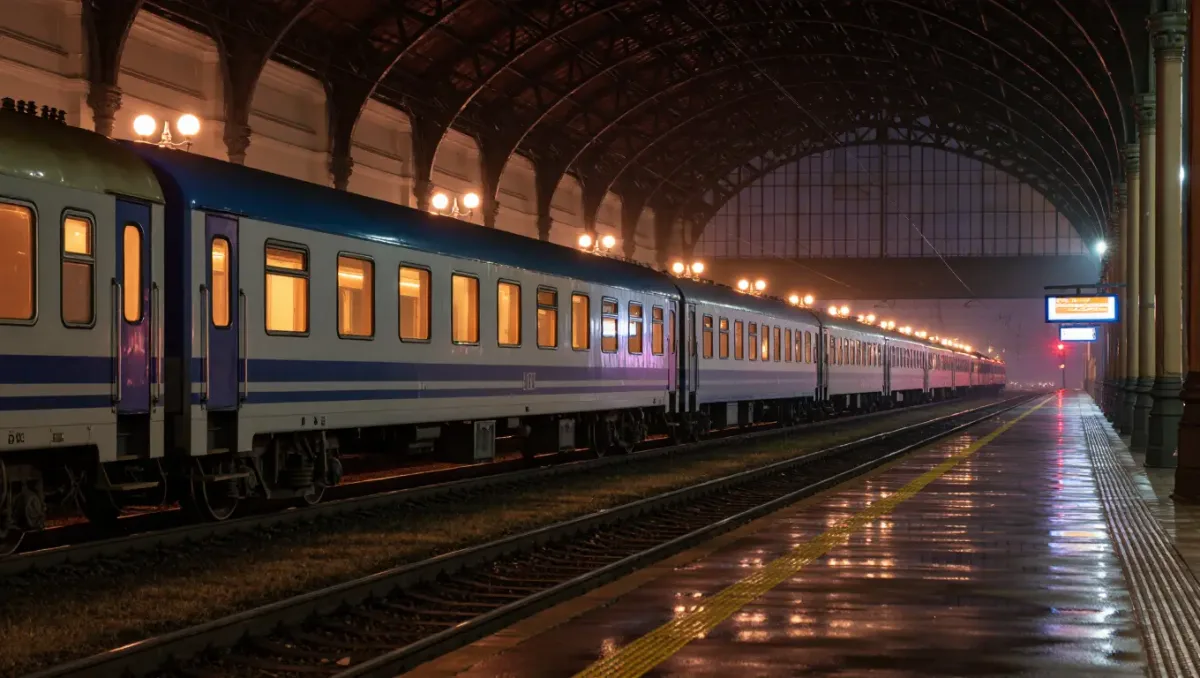
An overnight train earns its keep on one trade: the ticket costs more than a daytime train but replaces a hotel night, so anything above a couchette's modest fare is effectively paid for by the bed you did not book. The network has grown back — Austria's Nightjet anchors most routes, with connections including Vienna–Amsterdam, Munich–Rome, and the Brussels–Berlin–Prague service run by the start-up European Sleeper — and booking is the only genuinely tricky part, because night trains sell out and reservations are mandatory even for rail-pass holders.
This is a sourced roundup of the European night-train network and booking practice as of mid-2026; routes and schedules shift with the season, so confirm against operator sites when you plan. Information, not booking-agent advice.
What is the difference between a seat, a couchette, and a sleeper?
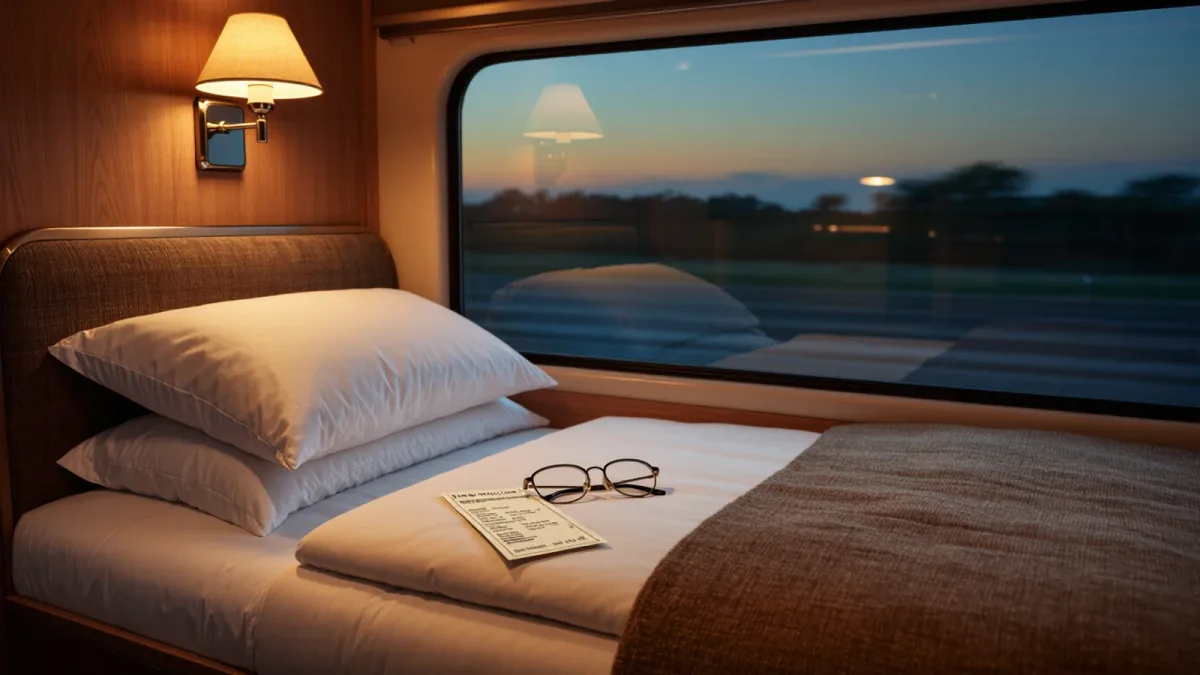
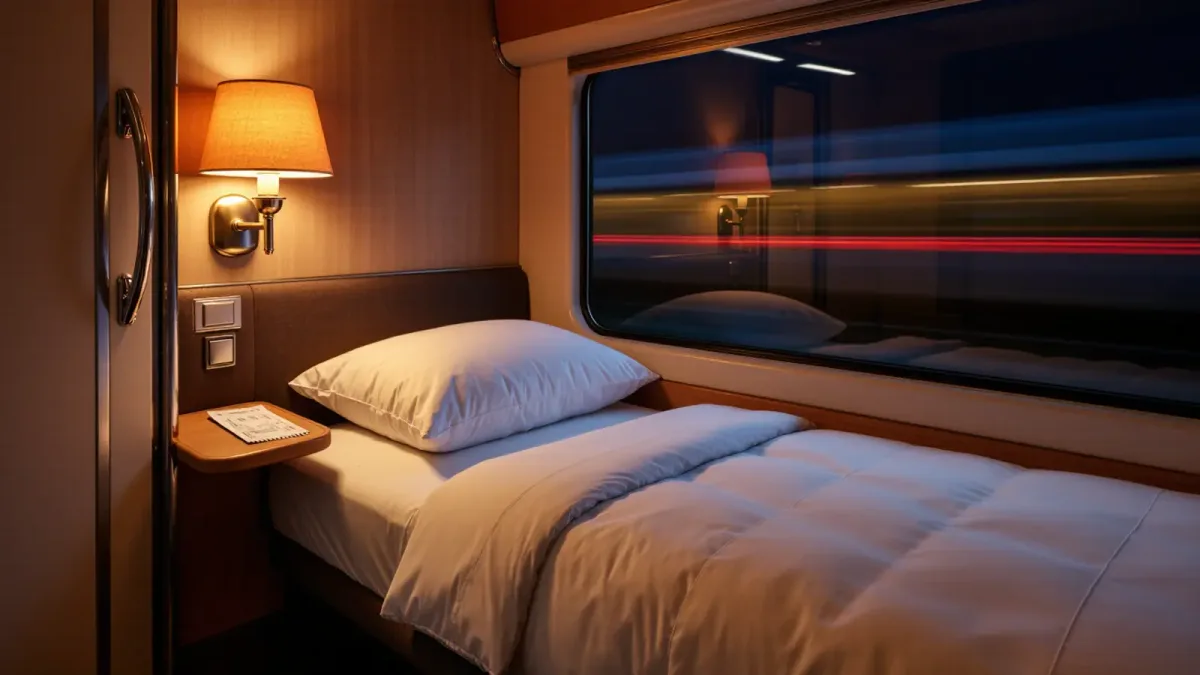
Three rungs. A standard reclining seat is the cheapest and the roughest — a long haul in a seat you already know how to feel the next morning. A couchette is a padded berth in a compartment of four to six, mixed or single-sex depending on the operator, with blanket and pillow provided in the modern versions; it is the workhorse of the value calculus. A sleeper is a private compartment with real beds — one, two, or three — plus washbasin, and on premium services a shower and breakfast; it prices like a modest hotel room, because that is what it replaces. The comfortable middle: book a whole couchette compartment as a private four for family or friends, which several operators sell at a group rate.
When does the night train actually win?
Geography decides it. Night trains shine on the long north-south and east-west axes where daytime flying involves an airport transfer on each end and the train station is central: Vienna to Amsterdam, Munich to Rome, Paris to Nice, Berlin to Brussels, Zurich to Hamburg. A 9 p.m. departure into an 8 a.m. arrival converts eleven or twelve hours of transit into zero daylight lost — and for trips of two or more days' duration in a dense corridor, it beats flying once the airport overhead is priced honestly. It loses on short hops, where day trains are faster and cheaper, and on routes where the night service meanders through freight territory and creeps in late.
How do you book without getting burned?
Book early — this is the entire advice. Night trains carry limited berths, prices rise toward departure like airlines', and the summer window sells out weeks ahead on popular routes. Book directly with the operating railway where possible, since operator sites show the full accommodation ladder and hold the reservation inventory; rail passes require a paid reservation supplement on night services, and pass-holder allocations are the first to disappear. Check which station the service actually uses — some night trains split or combine en route, with carriages continuing to different cities, and the seat numbers are the only thing that survives the shuffle.
What should be in your bag for the night?
The trick is packing for the compartment without unpacking the suitcase: water, earplugs, an eye mask, layers for the air-conditioning lottery, and your toiletries bag on top. Valuables stay with you — couchette compartments lock from the inside but the culture is trust-based, and the usual hostel rules apply. Breakfast arrives on the sleeper services or in the bistro car on some routes; eat before boarding anyway, because departure-time platform food is the weakest meal on any continent. And set an alarm for thirty minutes before arrival: the night train's one cruelty is a terminus at 7:30 a.m. after a full night of rolling.
- Couchette = the value rung; sleeper = the hotel replacement.
- Book weeks out; reservations mandatory, even with a rail pass.
- Central-station-to-central-station is the math that beats flying.
- Trains can split en route — know your carriage's destination.
- Earplugs, eye mask, layers, water. That is the whole packing list.
The night train's promise is not romance. It is arithmetic: twelve hours of distance traded for a hotel night you never had to pay for.
Seasonality bends the calculus in both directions. Summer is the seller-out season — the vacation corridors to Italy, the south of France, and the coast fill weeks ahead, and any last-minute summer spontaneity on a night train ends in a seat, not a berth. Winter is the quiet bargain: berths are available closer to departure, fares sit at the low end, and the long dark hours are exactly what the train was designed to absorb. Shoulder seasons — May, late September, October — are the connoisseur's window: available berths, soft weather for the arrival morning, and cities at their walkable best just as the train lets you off at 8 a.m. with a full day ahead.
Who should skip the night train?
Light sleepers — genuinely. A couchette compartment carries the ambient noise of a moving hotel, and the flat-bed experience does not fix light sleeping; if you cannot sleep on planes, budget for the private sleeper or fly. And anyone connecting to an early-morning obligation: night trains are punctual, but a delayed arrival has no later flight to fall back on, which is the one structural risk the day train does not carry.