A Maine lighthouse road trip works best as one continuous drive, not a scavenger hunt. Pick a direction, follow the coast, and treat each lighthouse as a stop with a purpose: park, walk, look, leave. The catch is that summer crowds and small lots can turn a five-minute photo stop into an hour of circling, so the order you drive matters as much as the stops you pick.
Our analysis: the winning move is to drive south to north, starting near the New Hampshire line and working up through the Portland area before pushing to the midcoast. You front-load the famous, busy lights early in the day, then spend the afternoon at the quieter ones where you can actually linger. If you're coming from inland or flying in, reverse it and do the quiet lights first while the tour buses are still at breakfast. For related coverage, see The eSIM travel guide: land connected, keep your number, spend single digits.
This is a sourced roundup, not a documented visit: the route logic below comes from how the coast is laid out, and every practical detail you should verify — hours, parking fees, tide times — is flagged as a check-before-you-go item rather than stated as fact.
Which lighthouses belong on the route, and in what order?
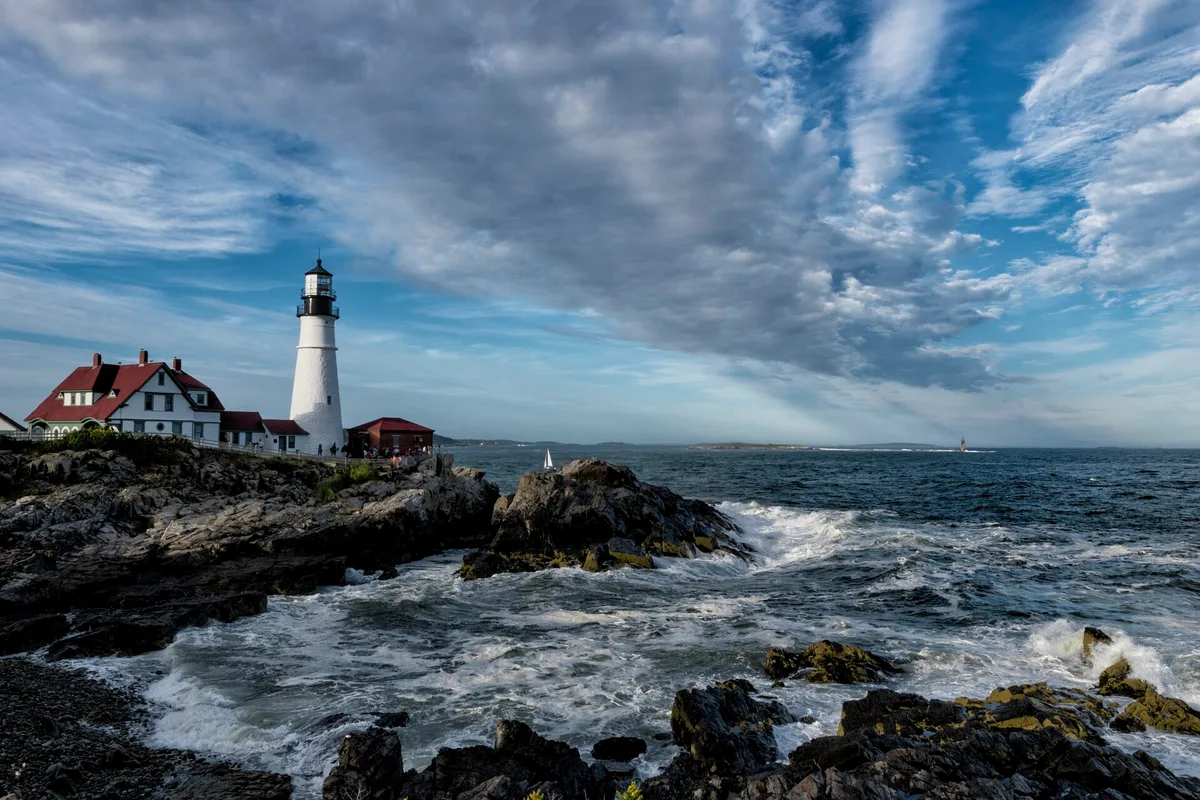
Start with the southern cluster. Cape Neddick's Nubble Light sits on a small island just off shore, which means you photograph it from the mainland — no walking required. It's the fastest stop on the route and a good warm-up. Farther up, Portland Head Light is the big name: a classic white tower on a headland with walking paths and a grounds area that rewards a longer stop than the others.
The midcoast stretch is where the trade-offs shift. Pemaquid Point pairs its light with rocky ledges you can walk out on, so it's a stop for people who want to stay a while, not snap and go. Bass Harbor Head Light, out on Mount Desert Island, is the far end of the drive — only include it if you're continuing to Acadia anyway, because it adds serious distance for a single view.
The ordering principle is simple: famous first, remote last. The well-known lights draw the crowds, and crowds peak midday. Anything you can see before ten in the morning or after four in the afternoon will feel like a different place.
What if you only have one day?
Cut the midcoast. A one-day version of this route is the southern run only: Nubble, Portland Head, and one midcoast light if the day is moving well. That's a full but honest day. Trying to reach Bass Harbor in the same loop turns the trip into mostly driving, and you'll arrive at the best stops tired and rushed.
The three-stop day also gives you slack. If one lot is full or fog rolls in, you can drop a stop without wrecking the plan. Fog is the real wildcard on this coast — a lighthouse you can't see is just a parking spot, so build your day so a swap is possible.
How do you handle parking, timing, and the small stuff?
Practical steps, in order:
- Check each lighthouse's own page or the local town site for current parking arrangements before you leave. Access rules on this coast change, and grounds that look public are sometimes park-run with their own hours.
- Go early. This is the single highest-leverage decision on the whole route.
- Keep stops short at the famous lights and long at the quiet ones. You're collecting views, not stamps.
- Check the tide if a stop involves walking on rocks. Some of the best vantage points are only comfortable — or only reachable — at lower water.
- Fuel and food in the bigger towns, not the tiny promontory villages. Services near the lights themselves are thin.
None of the specific hours or fees are stated here on purpose. They change by season and by site, and a stale number is worse than a reminder to check.
Who is this drive for, and who should skip it?
It's for people who like scenery with a destination attached: photographers, families who need short walks rather than hikes, and anyone fitting the coast into a longer New England loop. If you want to pair it with other regional trips, our Weekend in the Berkshires itinerary covers the inland side of that same corner of the country. This connects to our earlier piece, Weekend in the Berkshires: a two-day itinerary that actually holds together.
Skip it if you hate narrow roads or if your trip is in peak summer and you can't start early — the lots are small and the famous stops get tight. Also skip the full-length version if you're not comfortable with slow coastal driving; this is a route where the road is part of the point, and rushing it ruins it. If you'd rather leave the car behind entirely, the thinking in our guide to Europe's overnight trains is a different answer to the same question: how to see a lot without white-knuckling it.
What this means in practice: the drive rewards a light plan held loosely. Two or three lights done well beat six done in a hurry, every time.
The takeaway
Maine's lighthouse coast is one of the few drives where the headline sights are also the easy ones. Go south to north, start early, verify parking and access before you go, and let fog or a full lot decide which stops survive. The evidence here is the coast's own layout: the famous lights cluster in the south, the quiet ones stretch north, and the day shapes itself around that fact. What remains unknown for any given visit is the weather and the crowds — and those, unlike the route, you can't book ahead.
By the plain dictionary sense of a visit — going to see a place briefly — this is exactly what the route is built for: a string of short, satisfying stops rather than one long sit. For more route-style planning like this, browse our other guides, and if your trip includes renting a car overseas afterward, the primer on renting a car in Europe for the first time picks up where this one leaves off.