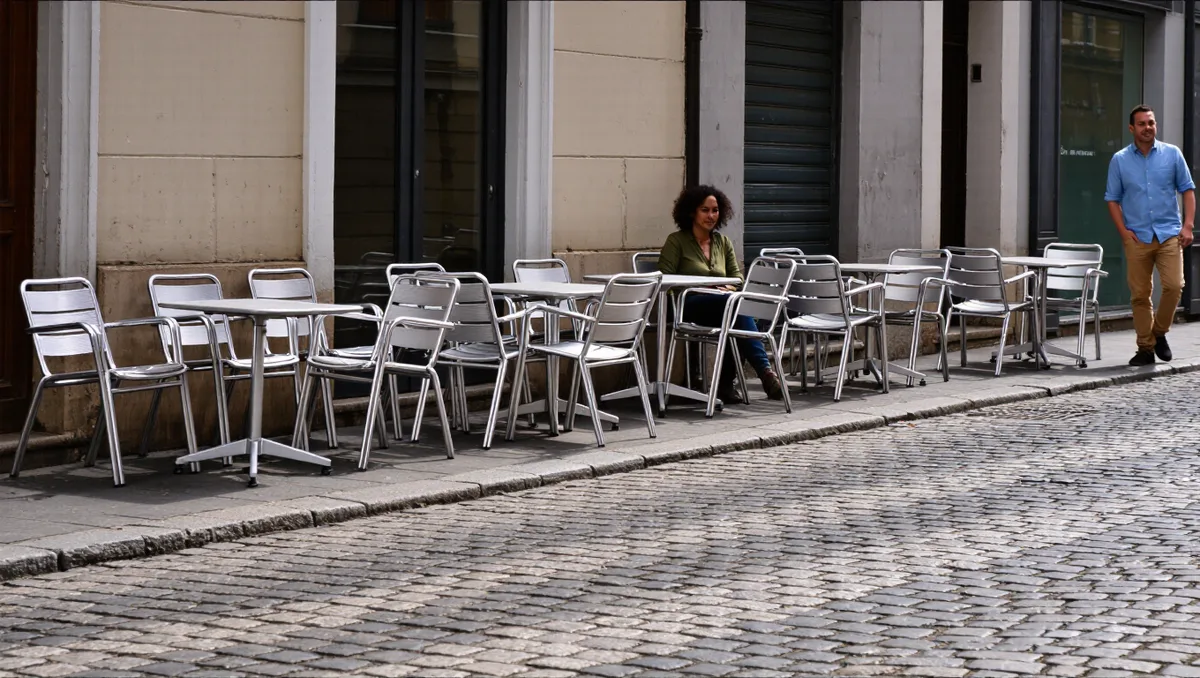
You need a cafe where you can actually work for two or three hours. The short answer: look for four things before you sit down — outlets, seat comfort, noise you can live with, and a crowd that matches your visit time. If any one of those fails, the session fails, and no amount of good coffee fixes it.
The trick is that you can judge all four in about ten minutes without buying anything first. Walk in, order, and while you wait, scan the room. Count the outlets. Watch where people are sitting and how long they stay. This article gives you the full checklist, plus the situations where each factor matters most. For related coverage, see The New York subway for first-timers: just tap your phone, and mind the fare cap.
What actually makes the best cafes for studying?
It is tempting to think the answer is atmosphere. It is not. It is infrastructure. A beautiful cafe with two outlets and wobbly stools is a place to buy coffee, not a place to write a paper. Here is the checklist to run in order:
- Outlets. Look at the walls and under the counter. A cafe with outlets at most seats is built for laptop users. One outlet by the window that everyone orbits is not.
- Seating. You need a surface big enough for a laptop and a notebook, and a chair you can sit in for two hours. Bench seating against a wall usually wins. Tiny round tables by the door usually lose.
- Noise. Stand still for thirty seconds and listen. Espresso machines, music with lyrics, and a chatty counter all compete with your focus. Background murmur is fine; a blender two feet away is not.
- The crowd's behavior. Are other people working? A room full of laptops is a good sign — it means the cafe tolerates long stays. A room full of quick coffee runs means you will feel like a squatter by hour two.
- Wifi. Ask, or check whether the password is posted. Some cafes cap session length or reset the network hourly. Know before you rely on it.
Run this scan before you commit to a seat. It costs you one coffee and saves you from the worst outcome: settling in, opening your laptop, and realizing the only outlet is behind a stack of chairs.
When should you go, and how long should you stay?
Timing matters more than the cafe itself. The same coffee shop can be perfect at 9 a.m. and unusable at noon. Two rules of thumb, both learned the hard way by anyone who has tried to work through a lunch rush: We covered a connected angle in How Tokyo's trains actually work when it's your first time.
- Go early or go mid-afternoon. The window after the morning rush and before the after-work crowd is usually the quietest. Mid-afternoon also tends to be when tables free up.
- Match your stay to the cafe's rhythm. If the place is packed and there is a line, plan a short session. If it is half empty at 2 p.m. and half the room is working, a long session is reasonable.
Buy something at least every couple of hours if you are camping a table. That is the basic social contract of working from a cafe, and it is also how you get invited back by staff who could otherwise decide otherwise. Order refillable or lower-priced items if budget is the concern — tea is usually cheaper than a latte.
What if the cafe fails the test?
Every city has cafes that look right and work badly. Know the common failure modes so you can spot them from the door:
- The no-outlet cafe. Fine for reading, bad for laptops. If your battery is healthy, you can still get an hour or two out of it.
- The loud one. Music plus machinery plus a small room equals noise you cannot out-focus. Noise-canceling headphones help, but they do not fix a blender.
- The laptop-hostile one. Some cafes post signs limiting laptop use at peak times, or simply have tables too small to work at. Respect the signs; they are usually there because the seats are scarce.
When a cafe fails, the fallback options are predictable: a library, a hotel lobby, a campus cafe, or a chain coffee shop, which almost always has outlets and predictable wifi even if the charm is thin. Chains are the backup plan, not the first choice — but a reliable backup beats a charming dead end.
How do you evaluate a cafe in a city you don't know?
Traveling changes the calculus. You do not know which cafes tolerate laptops, and you may be working from a phone hotspot instead of cafe wifi. A few adjustments:
- Check the photos before you go. Street-level photo listings often show the seating and whether people have laptops out. It is not perfect, but it filters the obvious mismatches.
- Have a connectivity plan that does not depend on the cafe. A local data plan or eSIM means any cafe works, wifi or not. Our eSIM travel guide covers how to set that up before you land.
- Scout near your actual route. The best cafe in a city is the one between your hotel and whatever you are doing that day. A great cafe forty minutes out of your way is a tourist attraction, not a workspace.
Also, mind the etiquette differences. In some cities, working from a cafe for hours is normal; in others, it is unusual and staff may quietly discourage it. Watch what the regulars do and follow their lead. Our guide to where to tip and where rounding up is the norm is a good reminder that cafe customs change at borders — the same is true of table-holding.
What this means for your next work session
Here is the practical version. Before you leave home or the hotel, pick two candidate cafes within ten minutes of each other. That way, if the first fails the outlet or noise check, you walk to the second instead of improvising. Bring a charged battery and a pair of headphones, and you have made almost any decent cafe workable.
One word on the word "best": it is doing a lot of work in any list of the best cafes for studying, because the right cafe depends on your session. A dictionary definition is a useful reality check here. According to Dictionary.com, "best" means "most advantageous, suitable, or desirable" — which is exactly the point. The best cafe for studying is the one suitable for your specific two hours: your battery level, your deadline, your tolerance for espresso-machine noise. There is no universal winner, only a good match.
So skip the ranked lists and run the checklist instead. Outlets, seating, noise, crowd, wifi — in that order, in ten minutes, before you sit. The cafes that pass are your cafes. Everything else is just coffee.