For most trips the answer is now a prepaid travel eSIM: buy a data package online from a travel eSIM provider, install it at home over wifi, and the phone picks up a local network the second you land — often under $10 for a week of ordinary use. Your physical SIM, and with it your home number for bank codes and two-factor texts, stays in place untouched. The old airport kiosk SIM swap has become the slower, pricier option it always secretly was.
This is a sourced roundup of how travel eSIMs work across providers and phones as of early 2026; pricing changes monthly and handsets vary, so verify your model's support before relying on it. The FCC publishes consumer guidance on wireless options abroad worth a skim before a first trip. And the standing note: information, not tech-support advice.
What is an eSIM, in one paragraph?
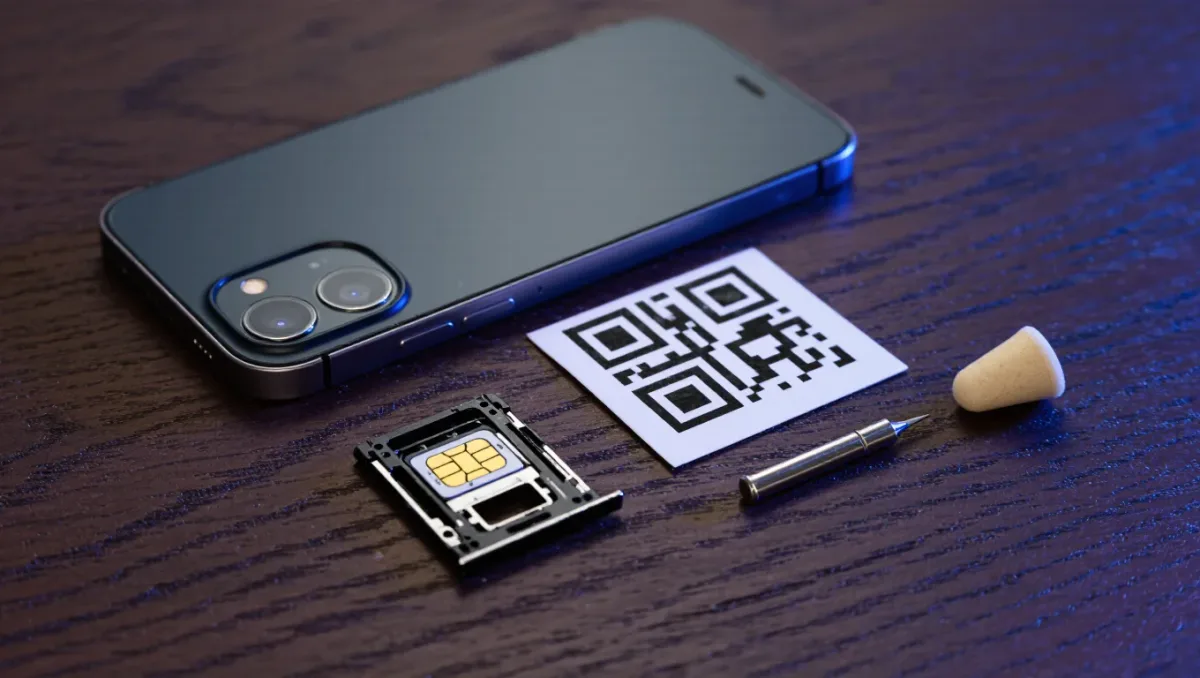
A software SIM: the carrier profile lives in the phone's storage instead of on a plastic chip. Modern iPhones and a wide range of recent Androids support multiple eSIMs at once, which is the whole trick — your home SIM handles calls and texts on roaming, while the travel eSIM handles data on a local network. You install the travel profile at home, keep it switched off, and flip it on at arrival. No tools, no tray pin, no queue at a terminal kiosk after a red-eye.
How much should a week cost?
Travel eSIM packages price by data volume and country grouping, and the market has settled into a visible range: small country packages for a week of maps, messaging, and browsing commonly run $5 to $15; regional packages covering a continent run somewhat more; and unlimited-style packages exist at prices that make hotel wifi look quaint. The comparison points are the airport kiosk SIM — frequently two to five times the local carrier's own store price — and your home carrier's daily roaming pass, which at $10 or more per day out-prices the entire travel eSIM by the third day. Buy per trip, not per year; most packages expire on schedule and owe you nothing afterward.
What do you actually do, step by step?
Before departure: confirm your phone is carrier-unlocked — a locked phone will not accept another carrier's profile — check the eSIM support list for your model, and buy a package sized to the trip. Install over wifi by scanning the provider's QR code, set the eSIM to handle cellular data, and leave it toggled off or in roaming-off until landing. On arrival: toggle it on, give it a minute to register, and confirm data works in maps. Two settings settle most first-trip problems: make sure data roaming is enabled for the eSIM line itself, and set your default line for calls and texts to the home SIM so verification codes keep arriving.
What are the traps?
First, buying before checking unlock status is the classic waste. Second, eSIMs are usually data-only: calls home ride apps, not the phone dialer — which is fine until a hotel or airline insists on a phone call and your home line's international rates apply. Third, package expiry clocks start at installation for some providers and at first connection for others; read which. Fourth, coverage claims run optimistic in rural areas and on some islands, where the local physical SIM from a major carrier sometimes beats the travel provider's partner network. And keep one paper backup: a screenshot of the QR code survives a lost phone far better than the email you cannot open without data.
- Confirm the phone is unlocked before buying anything.
- Install at home over wifi; activate on landing.
- Home line keeps calls and texts; eSIM takes data.
- $5-15 covers a typical week; daily roaming passes lose by day three.
- Screenshot the QR code as your backup.
The eSIM's real product is not data. It is walking out of arrivals with maps already working while the kiosk queue is still deciding between plans.
A word on the multi-country trip, since it changes the purchase: regional packages cover a whole continent at once and spare you buying a new profile at every border, but their per-gigabyte price runs higher than single-country deals. The break-even is simple to compute — three or more countries in one trip usually justifies the regional package, while a two-city hop still wins on country-specific pricing. Check that your actual list of countries is covered before checkout, because regional groupings are not intuitive and a Balkan detour or a Baltic add-on can fall outside the map you thought you bought.
Who should skip it?
Anyone on a group tour or resort stay with reliable wifi can leave the phone in airplane mode and lose nothing but the posting streak. Anyone with a locked phone, an older handset without eSIM support, or a plan that already includes generous international roaming at no extra cost — check that last one first; some home carriers' travel perks quietly make the whole purchase unnecessary.