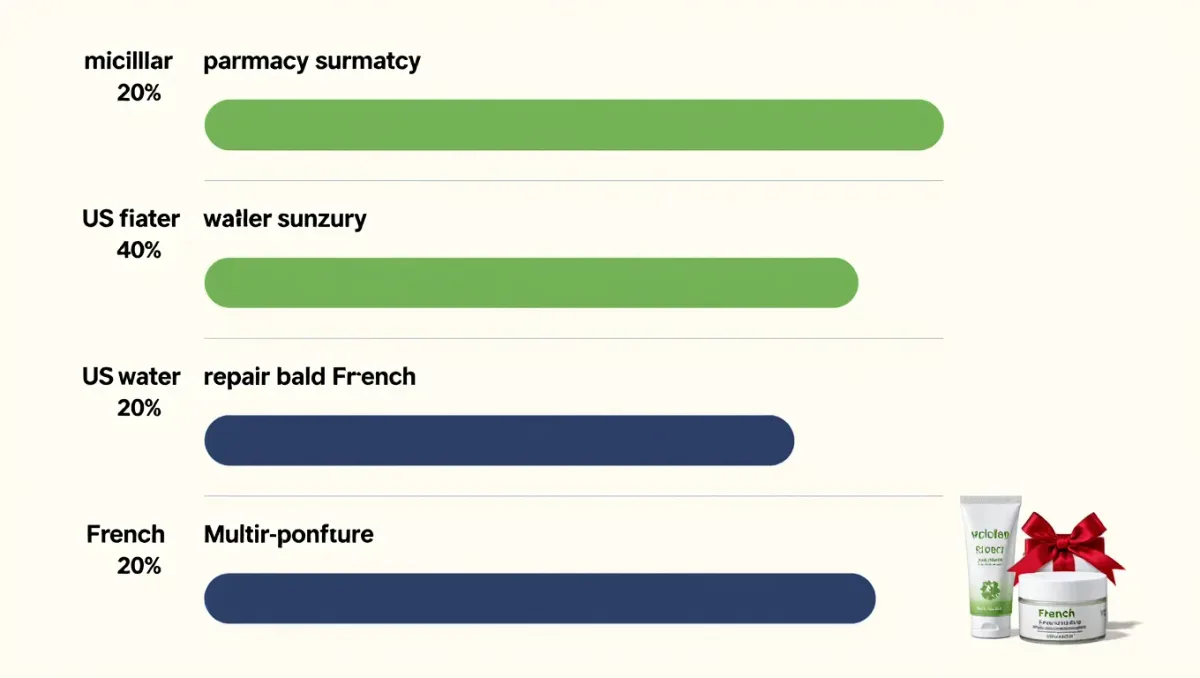
The Paris pharmacy haul earns its reputation on a short list: Bioderma Sensibio micellar water, Embryolisse Lait-Crème Concentré, Avène and La Roche-Posay sunscreens and repair creams, Caudalie and Nuxe oils and serums, Homeoplasmine, and the own-line dermocosmetics that barely export at all. Same brands, French list prices, no importer margin — typically 20 to 40 percent under US retail on the hero products. Everything else on the shelves is a souvenir with a pump top, and the famous queues are optional.
Why are French pharmacy prices lower?
Two structural reasons. First, the brands are French: dermocosmetics lines from Avène, La Roche-Posay, Bioderma, and Nuxe are domestic list-price goods here, while in the US they carry importer, distributor, and retail markups on top. Second, competition: pharmacies are dense — the green cross marks them every few blocks — and parapharmacies compete on skincare and body lines beside them. A 250 ml micellar water that prices in the mid-teens in dollars at US retailers has historically run well under ten euros here, and multipack offers push the per-bottle cost lower still.
Which pharmacy should you actually use?
Any of them, mostly. The neighborhood pharmacy near your hotel stocks the same regulated brands as the famous ones, often at the same or better prices, with zero queue. The internationally famous Saint-Germain shops — the ones that show up in every guide and feed — distinguish themselves on breadth: the full Caudalie and Nuxe ranges, exclusive gift sets, and English-speaking staff calibrated to the shopping list trade. That breadth is worth a detour; a forty-minute line for the same Embryolisse tube is not. Go at opening or mid-afternoon on a weekday, not Saturday.
What is genuinely worth the space in your bag?
The value case concentrates on formats and products that export badly: the large-format micellar waters, pharmacy-grade sunscreens — French filtering standards and textures that US shelves rarely match — rich repair balms, and the multi-purpose creams that French families actually keep in medicine cabinets. Gift sets are the sleeper deal: holiday and summer coffrets bundle full-size products at prices under the sum of their parts, and they pack flat. Fragrance is a separate market with its own pricing logic; the pharmacy advantage does not carry over reliably.
Can tourists get the VAT refund on pharmacy purchases?
Technically yes, practically rarely. France's tourist VAT refund requires a minimum single-store, same-day purchase — on the order of €100 — and hitting that threshold on skincare is possible but forces a concentrated basket. Note the arithmetic: the refund processing fee takes a cut, so the effective saving is under the headline VAT rate. For most hauls under the threshold, the French shelf price alone is the deal, and no paperwork is involved.
What should you skip?
Anything sold as exclusively French that you can find at home — the arbitrage vanishes the moment an import chain picks up a brand. Miracle products with no listing you can verify: French pharmacies sell regulated dermocosmetics, and the pharmacist can confirm what a product is registered as. And supplements and homeopathy for specific health claims — that is a conversation with your own doctor, not a duty-free decision made in a queue behind four other tourists.
- Buy large formats of the heroes: micellar water, repair cream, sunscreen.
- Neighborhood pharmacy for price and speed; Saint-Germain for breadth and sets.
- Coffret gift sets beat single products on cost per milliliter.
- VAT refund needs ~€100 in one store, same day — plan the basket accordingly.
The pharmacy is the rare Paris attraction that is better in your own neighborhood: the same green cross, the same shelves, no line, and the pharmacist has time to talk.
A note on the pharmacists themselves, because it is the part of the cliché that is true: the white coats are trained professionals, and in France that training gets used. Describe your skin and what you want it to do, and a good pharmacist will route you to the pharmacy-grade line that matches instead of the best-selling one, free of charge and without the upsell pressure of a beauty hall. It is the only shopping consultation in Paris that comes with no expectation of tipping, and often the fastest way to skip three wrong purchases.
Who should skip the run entirely?
Anyone whose routine uses no French brands — the savings only exist against import markups on specific products. And anyone flying a low baggage allowance home: liquids add up in weight fast, and a suitcase of water-based creams can tip a fare class. The pharmacy will hold; it has held since before the queues.