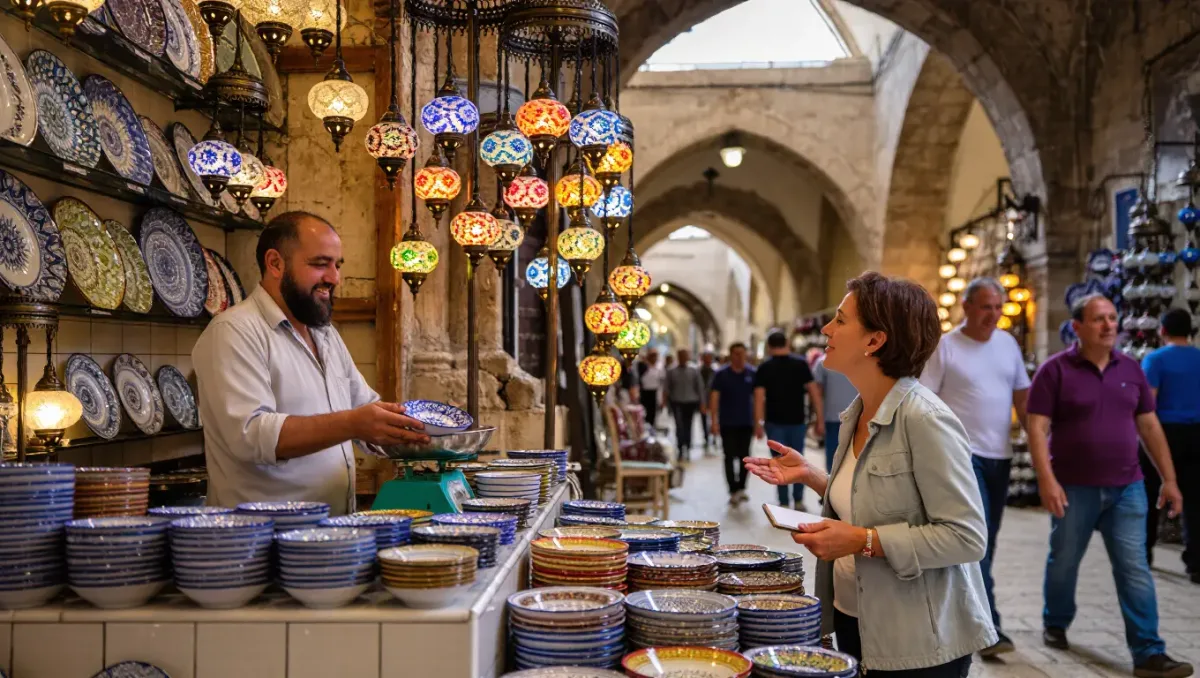
Bargaining in the Grand Bazaar is expected, welcome, and easier than it looks: sellers open high — often 30 to 50 percent above where a deal lands — you counter at about half of the opening, and you settle somewhere in the middle after two or three friendly rounds. The rules that actually matter: never pick up an item you are not prepared to negotiate for, never treat the first price as an insult, and never say a final number you will not honor. Do that, and haggling in the world's oldest shopping mall is a conversation, not a contest.
This is a sourced roundup drawing on long-form reporting on the bazaar and standard market practice, current as of spring 2026; no documented visit is behind it, so treat price percentages as reported ranges rather than quotes. And the standing house note: information, not shopping advice.
How does a negotiation actually unfold?
You show interest, the seller names a price, you react — genuinely, verbally: too high, and say why. The seller comes down, sometimes sharply; you give a counter around half the opening figure, and the middle ground appears within a few exchanges. Tea may appear. Accepting it is fine and costs nothing — the alleged obligation to buy after tea is a tourist legend. The whole dance runs on courtesy: sharp numbers, warm manner. A buyer who is rude gets accurate full price; a buyer who is pleasant gets the seller's real floor, which is often well below it.
The walk-away is the strongest move in the building, and everyone in the bazaar knows it. When your number and his number will not meet, thank him and leave. If the price was achievable, you will be called back before you clear the next archway. If you are not called back, your number was genuinely below the floor — and now you have market data.
What is the bazaar actually good for?
Carpets and kilims, where expertise matters more than bravado — a buyer who cannot tell machine-made from hand-knotted should shop at fixed-price government-vetted stores or accept that the discount is on a price invented for the occasion. Ceramics from Iznik-style workshops, leather, gold, silver, lamps, textiles, spices at the adjacent Egyptian Bazaar. The bazaar holds on the order of 4,000 shops along 61 covered streets, which means the same category is sold a dozen times within a five-minute walk — the single most useful fact for a negotiator, because competition is your leverage and comparison is free.
What does the same trip cost at fixed price?
Istanbul has plenty of fixed-price stores — in the Spice Bazaar's peripheries, in Karakoy and Beyoglu design shops — where the tag is the price and the quality is labeled honestly. Paying it is not a defeat: it buys you the ability to compare goods without a performance attached. The pragmatic split used by experienced visitors: buy simple souvenirs at fixed price anywhere, reserve bargaining for the categories — carpets, ceramics, jewelry — where the discount space is real and the fun is in the purchase.
What are the traps?
The big one is category blindness: a genuine 40 percent discount on an unmarked carpet still tells you nothing about whether the base price was honest. The second is the co-owner routine, where a second person appears to "help" translate or price — not unique to Istanbul, standard worldwide, and answered the same way: one seller, one negotiation. The third is Sunday. The Grand Bazaar closes on Sundays, so a bargain hunt planned on the wrong day ends at the fixed-price stores by default — which, given the previous paragraph, is not the worst outcome.
How do you pay, and what about shipping?
Cash in lira strengthens your position — card fees are real for small shops, and sellers sometimes quote a slightly better number for cash — but cards are widely accepted, and for a serious carpet purchase the card's protections beat the cash discount. Shipping large purchases home is an ordinary service: established shops arrange freight and insurance routinely, get the cost quoted in writing before you agree to the sale, and treat a vague "no problem, we ship" as a number you have not heard yet.
The bazaar's best-kept secret is that it is not one market. It is four thousand shops in a grid, which means every "last price" in the building has a competitor thirty seconds away.
Who should skip the bargaining entirely?
If haggling makes you miserable, nothing in the bazaar requires it: the fixed-price stores, the museum shops, and the design boutiques of Beyoglu will sell you handsome ceramics and textiles at honest tags. The bazaar is worth visiting for the architecture and the coffee alone — the 15th-century structure survived fires and earthquakes, and the negotiation is strictly optional theater on top of it.