If you want a suitcase you can live out of, standard packing cubes win: they cost $10–$40 per set, add almost nothing to bag weight, and turn a black hole into labeled drawers. If you need to fit ten days of clothes into a carry-on, compression cubes squeeze air out and pack roughly 20–30% flatter — at the price of wrinkled shirts and a suitcase that's harder to open mid-trip. Rolling beats folding for space on soft items but loses to both cube methods for organization. Those are the trade-offs published manufacturer specs and repeated traveler testing point to, as of spring 2026.
This is a comparison of published specifications and method mechanics, not a lab report: the weight and fabric figures come from maker spec sheets, and the space-saving ranges reflect what manufacturers and independent testers commonly report.
What did we compare?
Three criteria: volume (how flat each method packs), retrieval cost (what happens when you need the shirt at the bottom), and garment condition on arrival. A fourth practical line — added bag weight — comes straight off spec sheets: standard nylon cubes run roughly 2–4 ounces each, compression cubes 4–6 ounces because of the second zipper layer and heavier fabric.
Standard packing cubes: drawers, not space savers
The honest spec-sheet truth about regular cubes is that they save little space by themselves — the fabric adds a sliver of bulk around neatly folded stacks. What they buy is retrieval: one cube per category means opening a 12-inch flap instead of excavating the bag, which is the difference between a 30-second train-platform repack and a suitcase explosion in the hostel dorm. Ripstop nylon around 70 denier is the common spec; zippers are the failure point, so YKK-brand zippers on the published spec sheet are the one quality marker worth checking.
Compression cubes: flatter, wrinklier, heavier
Compression cubes add a second zipper that squeezes the packed volume down, and the commonly reported 20–30% flattening is real — enough to turn "won't close" into "closes with room for shoes" on a week-long carry-on. The costs are printed in the same specs: heavier fabric, doubled zipper stress (the most common failure mode in user reports), and clothes pressed hard enough that anything tailored or linen emerges looking like it lost an argument. They're also a one-way door mid-trip: recompressing properly means unpacking the cube, so travelers use them for the outbound flight and abandon the discipline by day three.
Rolling: free, good for the right fabrics
Rolling soft cotton items — t-shirts, jeans, knitwear — saves meaningful space over flat folding and costs nothing. It's the worst option for structured garments: blazers, dress shirts, and linen roll into permanent creases. Its organization value is zero, which is why rolling inside standard cubes is the combination most experienced one-bag travelers land on.
The comparison in one table
| Method | Space saved | Retrieval | Wrinkles | Added weight |
|---|---|---|---|---|
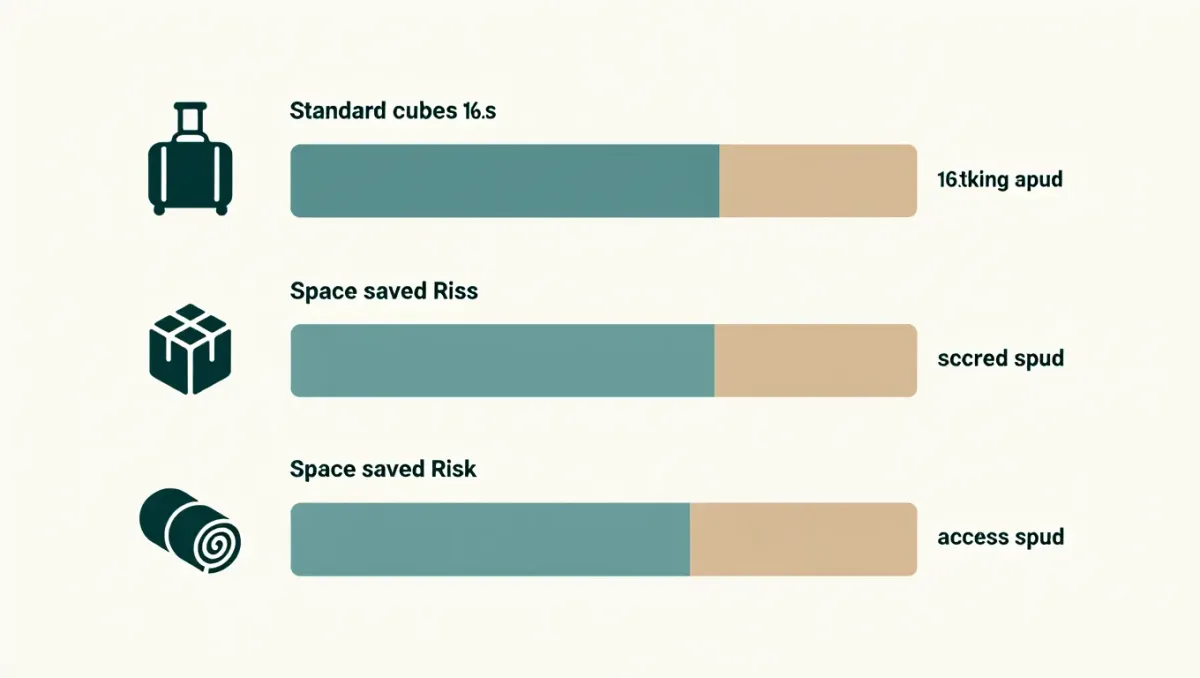
| Standard cubes | Minimal (organization is the point) | Best — drawer access | Low | ~2–4 oz per cube |
| Compression cubes | ~20–30% flatter | Worst — full unpack to recompress | Highest | ~4–6 oz per cube |
| Rolling | Good on soft items | Poor without cubes | Creases on tailored fabrics | None |
What we'd tell a first-timer
Start with a set of four standard cubes — two large, two small — and roll soft items inside them. Add compression cubes only if a specific bag won't close, and use them for transit rather than daily living. Skip compression entirely for business trips where a pressed shirt is part of the job.
FAQ
Do packing cubes really save space?
Standard cubes mostly buy organization, not volume. Compression cubes are the space savers, typically flattening contents 20–30% at the cost of wrinkles and extra weight.
What should you not roll when packing?
Structured and crease-prone garments: blazers, dress shirts, linen, and anything pleated. Roll cotton tees, jeans, and knitwear instead.
Are compression cubes bad for clothes?
They press fabrics hard, which sets creases and stresses seams on the second zipper layer. Fine for casual cotton; rough on tailored pieces.
How many packing cubes do I need?
Four covers most trips under two weeks: shirts, bottoms, underwear and socks, and one spare for dirty laundry or cables.