For a one-bag trip of two weeks or less, a 40-liter carry-on-sized backpack works — and the spec sheet narrows the field fast: published empty weights for the most popular models run from about 1.5 kg (Osprey Farpoint 40) to about 2.2 kg (Tortuga Travel Backpack Pro 40L), a difference you feel on every staircase at every train station, per manufacturer specifications as of early 2026.
This is a comparison of published specifications — dimensions, weights, materials, harness construction — not a wear-test report. The numbers come from maker spec sheets; fit and comfort vary by body, so treat the table below as a shortlist, not a verdict.
What did we compare?
Four published attributes: empty weight, main-opening style, harness and hip belt design, and water bottle/laptop provisions. Those four settle 80% of one-bag satisfaction, because a 40L pack lives on your back for entire transit days in a way a roller bag never does.
The weight split: featherweights vs haulers
The published weights split the field in two. Around 1.5–1.7 kg sit the Osprey Farpoint 40 and Aer Travel Pack — traditional hiking-influenced designs with real framesheets. Around 2.0–2.2 kg sit the Peak Design Travel Backpack 45L and Tortuga Pro — boxier, more organized, more padded, heavier. Every gram of that difference is bought twice: once at the gate when the bag is heavier, once on your shoulders when it's lighter and better distributed. Neither choice is wrong; they're different arguments.
Opening style: clamshell vs panel loader
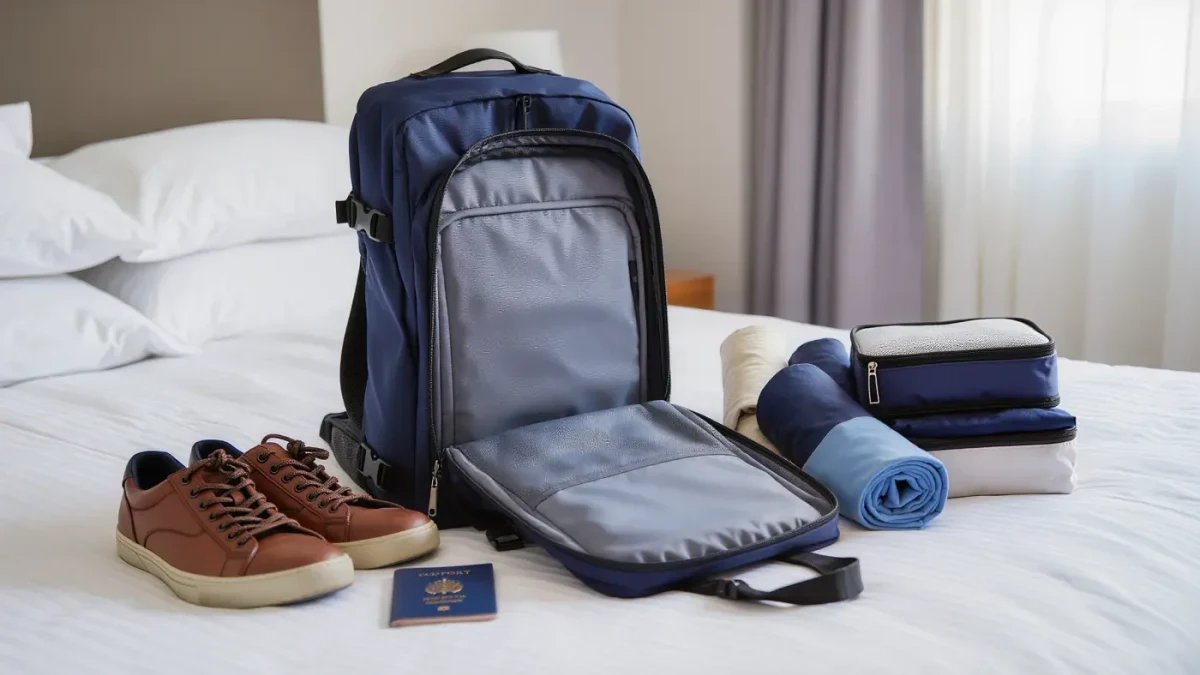
Clamshell packs (Farpoint, Cotopaxi Allpa 42L) unzip around three sides and open like a suitcase — best for travelers who pack in cubes and want the hotel-bed layout. Panel loaders (Tortuga) open one large face and behave more like a duffel with structure — best for people who live out of the top of the bag. Peak Design splits the difference with dual side access, which is genuinely faster in an overhead bin but adds zippers, weight, and cost: its published price, near $420 as of early 2026, tops the category, against roughly $160–$200 for the Farpoint and Aer.
Harnesses: the part spec sheets undersell
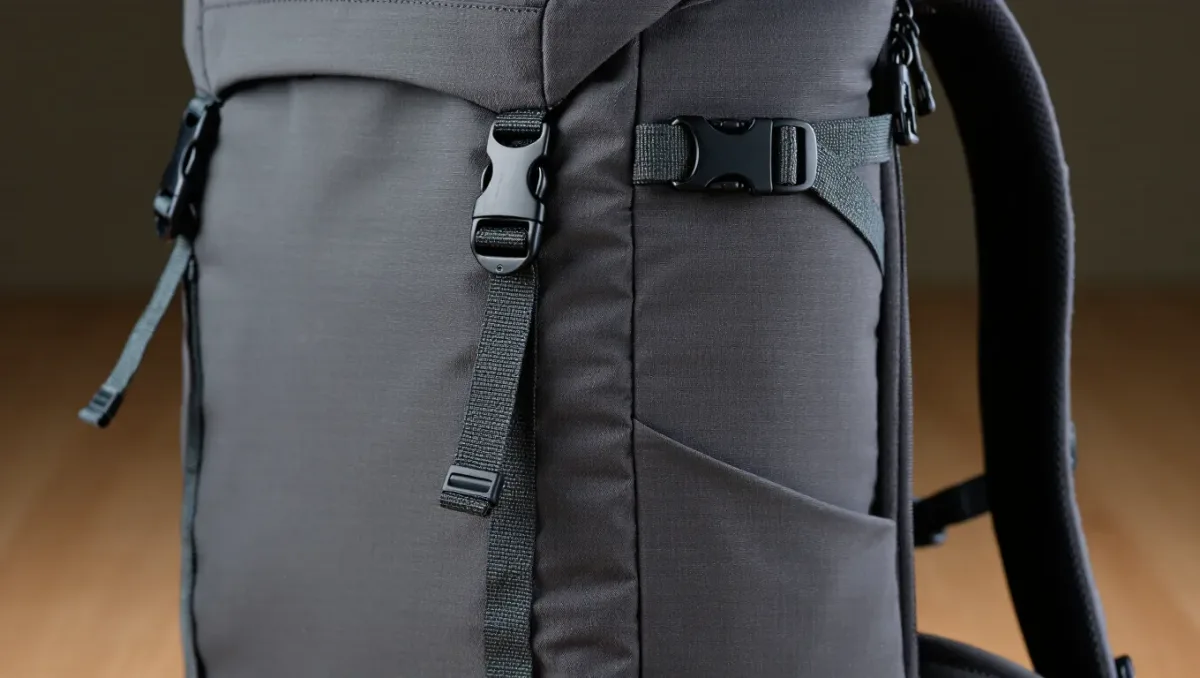
Publishers list "hip belt: yes/no" — what that line hides is the entire comfort story. Tortuga ships a padded, load-transferring hip belt aimed at taking weight off shoulders on long walks; Peak Design's is a thin strap closer to a stabilizer. Farpoint's comes from Osprey's hiking line and is the most adjustable of the group. If your itinerary involves 30-plus-minute walks with a full bag, the harness design matters more than any other line in the table.
The comparison table
| Model | Published capacity / weight | Opening | Approx price (early 2026) |
|---|---|---|---|
| Osprey Farpoint 40 | 40 L / ~1.54 kg | Clamshell | ~$160–$185 |
| Aer Travel Pack | ~38 L / ~1.7 kg | Clamshell + side | ~$200–$260 |
| Cotopaxi Allpa 42L | 42 L / ~1.6 kg | Clamshell | ~$200–$230 |
| Tortuga Travel Pro 40L | 40 L / ~2.1 kg | Panel loader | ~$350–$375 |
| Peak Design Travel 45L | 45 L / ~2.05 kg | Dual side panels | ~$420 |
Who should skip one-bag entirely
Skip the 40L backpack if your trips are business-formal — a garment folder solves a problem a duffel-shaped bag creates — or if you have back or shoulder issues that a rolling carry-on already solves. The one-bag argument is about stairs, trains, and cobblestones; if none of those are on your itinerary, you're paying a comfort tax for nothing.
FAQ
Is a 40L backpack really carry-on legal?
On most full-service carriers yes — published cabin limits typically allow roughly 55 x 35 x 23 cm. Budget European and Asian carriers enforce smaller limits, where a 30–35L pack is the safe size.
Is 40L enough for two weeks?
Yes with laundry: roughly ten garments plus toiletries and shoes fits 40 liters using packing cubes. Without laundry access, two weeks is the practical ceiling.
What matters more, weight or organization?
Weight if you walk long distances with the bag; organization if you change hotels nightly. The lightest and the most organized models in this category are different bags by design.
Are expensive travel backpacks worth it?
The premium models buy load-transfer harnesses, better zippers, and lifetime warranty support. At published prices near $350–$420 versus $160–$200, you're paying for the parts that touch your body.