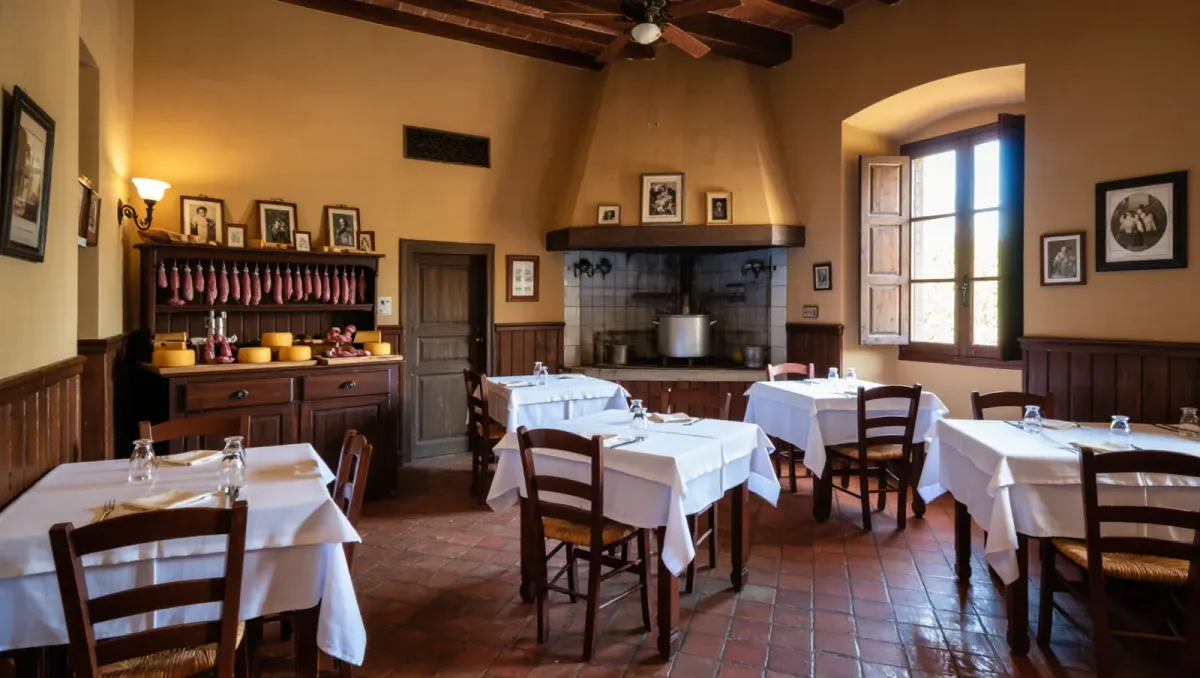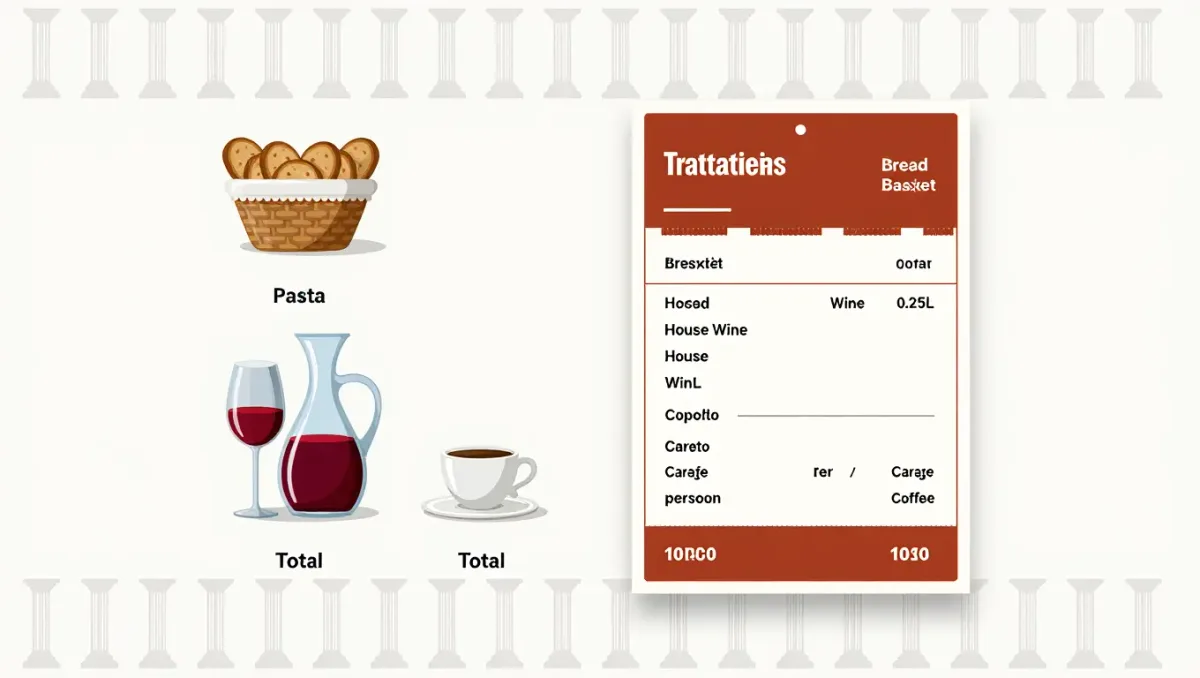
At a Roman trattoria the menu price is not the whole bill: a per-person "coperto" — the cover charge for bread and table service, typically one to three euros where it applies — is added to every diner's bill, and Italian law requires it to be disclosed, per published consumer guidance. Everything else follows the house rhythm: house wine by the quarter-liter, a printed bill you must ask for, and a tip that is a small coin gesture rather than a percentage obligation.
This is a sourced etiquette explainer of Roman trattoria mechanics as of spring 2026, built on Italian consumer rules and long-documented dining customs — the parts of a Roman meal that no translation app explains.
The coperto: the charge on every seat
The coperto is a centuries-old institution: a fixed per-person charge covering bread, table setting, and service. Where charged, it commonly runs one to three euros per person — tourist-center restaurants trend to the top of that range and beyond — and Italian consumer law requires restaurants to state it, either on the menu or on a posted notice, before you order. A coperto that appears on the bill without disclosure is contestable, and the documented visitor protection is simple: glance at the menu footer before sitting. The coperto is not a tip and is not optional where properly disclosed; refusing to pay it over bread you didn't eat is a fight the bill says you lose.
House wine: the quarter-liter order
The trattoria wine move is the "quarto" — a quarter-liter of house red or white, often from the region, at prices that can still land under five euros in ordinary neighborhoods. The wine frequently arrives in a humble carafe or even a half-bottle of water repurposed; this is tradition, not corner-cutting, and the regional pour is the point: Lazio whites and Sagrantino-adjacent reds in ordinary Roman houses. Ordering by the glass exists, but the carafe is the house economics — and the reason a full Roman dinner with wine can cost less than a single cocktail at a hotel bar.
How the meal actually runs
- Primi and secondi are separate courses, not a bundled plate: pasta first, meat second. Ordering a steak and a pasta to share as one plate is where the kitchen's structure shows — both arrive, separately, in the kitchen's order.
- "Acqua del rubinetto" is not a thing at table: Romans drink bottled water — "naturale" (still) or "frizzante" (sparkling) — and tap water isn't customarily served.
- The bill never arrives uninvited. "Il conto" gets you the check, printed, itemized with coperto listed. Lingering after the meal is expected, not charged.
- Coffee comes after dessert, never during the meal — and a cappuccino after noon marks you as a visitor, though nobody will stop you.
Tipping: coins, not percentages
Italian tipping custom is modest by design — servers are salaried and the coperto covers service. The documented norm: leave the change or round up a few euros for good service; 10% at most, and only at sit-down places where it genuinely moved you. No tip at all is socially acceptable. What Italians never do is tip percentages on card terminals — the machine has no tip screen, and cash coins on the table are the entire gesture.
Tourist-center traps, stated plainly
The documented risks near the big monuments: specials quoted verbally without prices, service charges beyond the disclosed coperto, and menus with photos aimed at passersby. The protections are equally stated: menus must show prices with service included per Italian rules, and the local pattern — trattorias a few streets off the corridor with one page of pasta and workers at the tables — is the reliable filter, not a fixed neighborhood.
FAQ
What is the coperto charge in Italy?
A per-person cover charge for bread and table service, typically one to three euros where applied. Italian law requires it to be disclosed on the menu or a posted notice before you order.
Do you tip at Roman trattorias?
Only a small gesture: round up or leave a few euros in cash for good service. Servers are salaried and the coperto already covers service; no tip is socially acceptable.
What is house wine in Rome like?
Ordinarily a regional pour served by the quarter-liter carafe at low prices — the standard trattoria order and a big part of why dinner stays affordable.
Why didn't the bill come automatically?
Italian tables are yours for the evening; asking for "il conto" is how the meal ends. It's courtesy by design, not forgotten service.