Which reservation app to install depends on where you want to eat, not which app is best: OpenTable lists the widest network of restaurants across North America and beyond, Resy holds the reservations at the trend-driven independent restaurants travelers actually plan trips around, and Tock is the system behind prepaid, ticketed, and high-demand dining. A restaurant appears on one primary system because platforms compete for inventory — so if the time you want isn't showing on one app, the fix is often to check which system the restaurant actually runs.
This is a sourced explainer of how the three major platforms work as of spring 2026, based on the platforms' published mechanics and fee structures — useful for any city where you're dining as a visitor without a local reputation.
OpenTable: the wide network
OpenTable, owned by Booking Holdings, is the largest network by restaurant count — tens of thousands of venues across dozens of countries, from chains to neighborhood bistros. The mechanics that matter to diners: reservations are free to book, points accumulate per honored reservation redeemable toward dining discounts, and cancellation policies are set per restaurant and shown before you confirm. The trade-off of breadth: the most in-demand independents in major cities often aren't on OpenTable at all, because they've signed with Resy or run their own books.
Resy: the hot independents
Resy, owned by American Express, dominates the buzzy-independent tier in US cities and has expanded internationally. Its defining mechanics: reservations release in scheduled drops — commonly 14 or 30 days ahead at a stated release time — so scoring a prime-time table at a sought restaurant is a calendar alarm game, not a refresh game. Cardholder perks are structural: Amex cardholders get access to some reservations held back from general release through the app's Global Dining Collection. Resy also surfaces cancellations in real time, which is how flexible diners eat well same-day.
Tock: prepaid and ticketed dining
Tock — majority-owned by American Express since 2024 — inverts the model: instead of a free reservation, you buy one. Tock restaurants sell reservations as prepaids with deposits per seat, and high-concept formats as literal tickets with a menu, time, and price, like theater. The system suits tasting-menu rooms and destination restaurants where no-shows are ruinous. For travelers this changes two things: cancellation windows are stricter and the cancellation fee is real, and the "reservation" is already paid, so the check at the end is drinks and extras only.
How to use the systems as a visitor
- Find out which system runs your target restaurant — its own website links it — and book there; a full book on one aggregator means nothing if the restaurant's own page shows another channel.
- Learn the release time: Resy drops at published intervals per restaurant, and OpenTable inventory for prize tables often opens at stated windows too. A reminder at release beats hours of refreshing.
- Use the cancellation feed: both OpenTable and Resy show same-day openings, and popular restaurants empty slots 24 hours ahead when deposit holds expire.
- Off-peak and bar seats: early seatings, late seatings, and walk-in bar counters bypass the competition entirely — and at Tock-style rooms, a bar seat is sometimes the only free option.
Do no-shows really cost you?
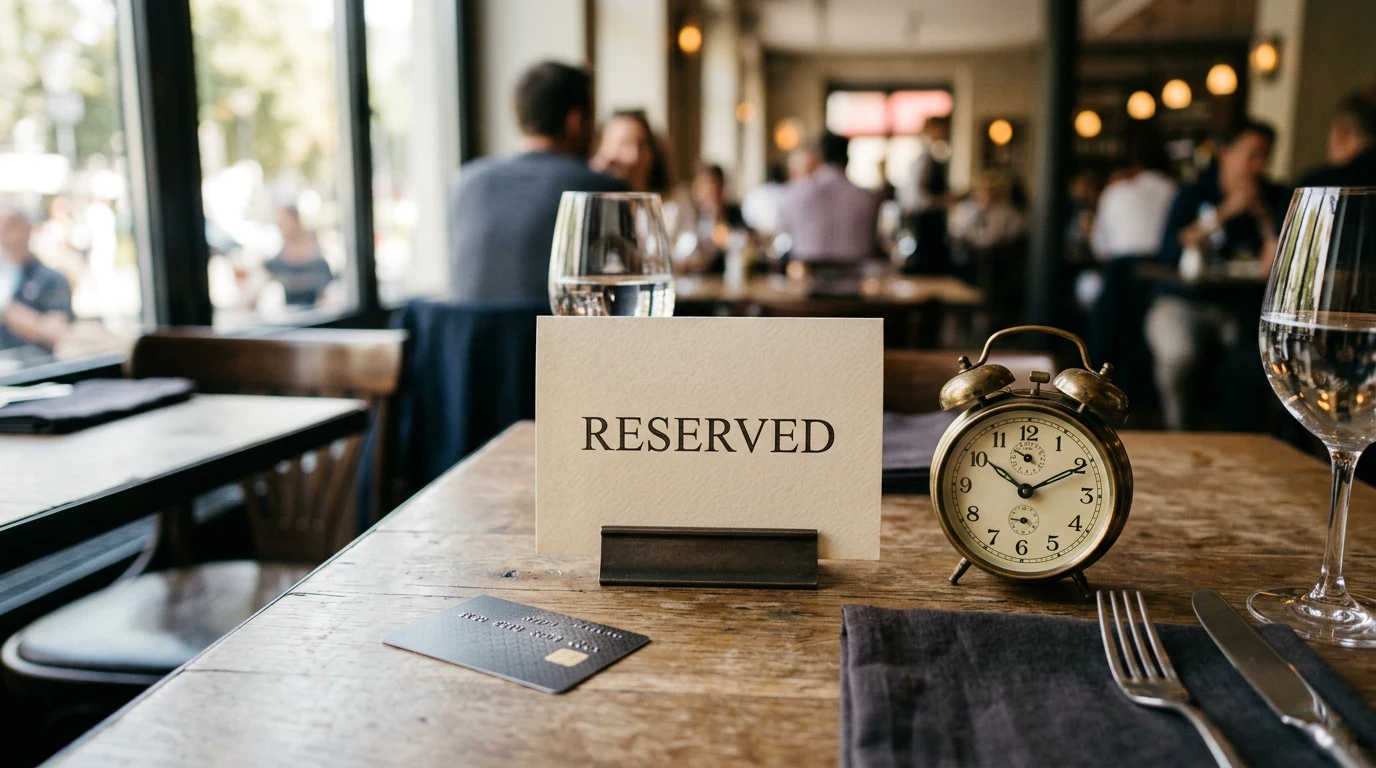
Yes, increasingly mechanically: platforms let restaurants enforce no-show fees against a saved card — commonly $25–$50 per person on standard bookings and far larger on Tock prepaids — and repeat no-shows can get a diner flagged. Cancel inside the stated window instead; it costs nothing and returns the table to the cancellation feed someone else is watching.
FAQ
Which reservation app should travelers use?
Install both OpenTable and Resy if dining across the US: OpenTable for breadth, Resy for the independents travelers plan around. Add Tock only for tasting-menu destinations.
Why do reservations on Resy disappear so fast?
Inventory releases in scheduled drops — often 14 or 30 days ahead at a stated time — so the full night books within minutes. Later slots reappear through the real-time cancellation feed.
What is a Tock prepaid reservation?
A reservation you pay for at booking, like a ticket — common at tasting-menu restaurants. Cancellation windows are strict and the deposit is real money.
Do no-show fees actually get charged?
Yes. Restaurants can charge the published no-show fee to the saved card, and repeat offenders can be flagged across a platform.