Michelin stars are decided by anonymous, salaried inspectors who visit unannounced, pay their own bills, and rate restaurants solely on the food against five published criteria — quality of ingredients, mastery of technique, harmony of flavors, the personality of the chef, and consistency across visits. Customer reviews, décor, and table settings play no role, per the Michelin Guide's own published descriptions of its process as of early 2026.
Understanding that machinery changes how you should use the guide: a star is a statement about one kitchen's cooking on repeat visits, not a ranking of everything else on the street. This explainer walks through how the system actually works, drawn from the guide's published methodology.
Who the inspectors are
Michelin describes its inspectors as former hospitality professionals — chefs and restaurant people — working full-time, forbidden from disclosing their occupation even to family, and required to pay for every meal like any other customer. The anonymity is the method: a restaurant that can't identify the inspector can't stage a performance. The guide has long said inspectors eat out several times a month on company expense and that every starred restaurant receives multiple visits before a star is conferred — and repeat visits afterward to check consistency, the criterion most often violated.
The five criteria, and what they exclude
Per the guide's published rating criteria, inspectors judge: the quality of products; mastery of flavor and cooking techniques; the harmony of flavors; the personality of the chef as expressed in the cuisine; and consistency across the whole menu and over time. Notably absent from the list: interior design, service style, tableware, and comfort — those feed the separate crossed-forkands symbol for ambiance, not the stars. A shoebox with plastic stools and a transcendent broth can hold three stars; a palace dining room with dull food cannot.
What each star means — literally
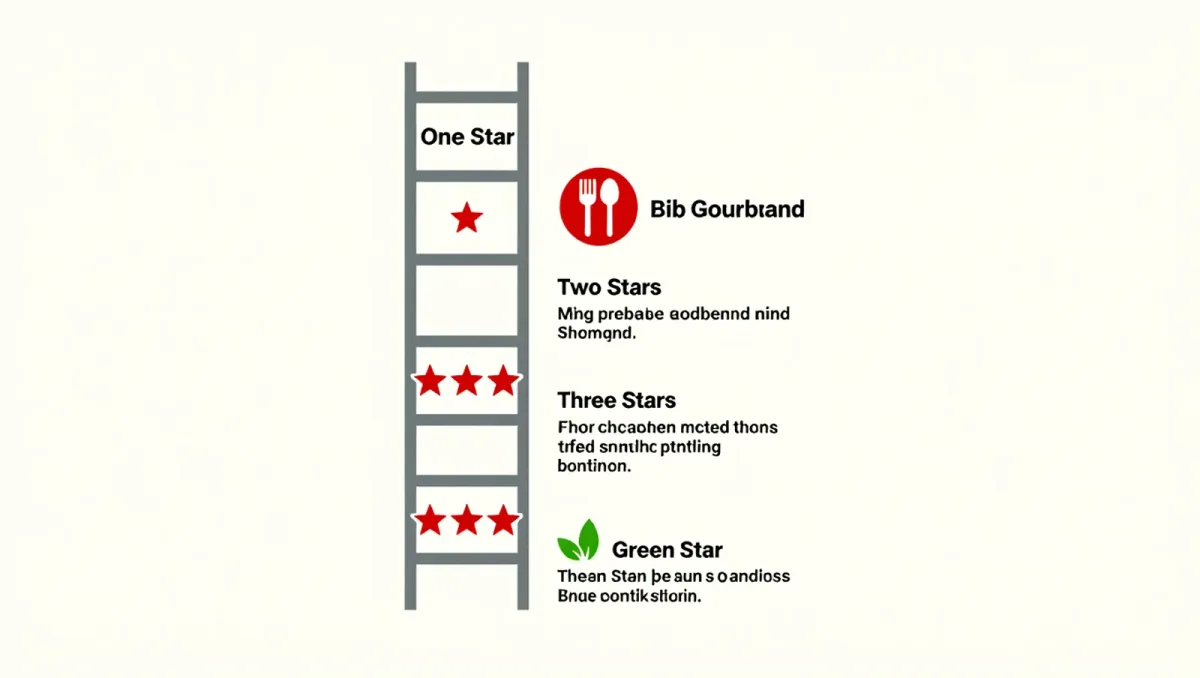
The definitions are quoted identically around the world: one star, "a very good restaurant in its category"; two stars, "excellent cooking, worth a detour"; three stars, "exceptional cuisine, worth a special trip." That third phrase is the operational one — the test for three stars is whether the food justifies planning a trip around it. Stars are awarded or removed by the guide's editorial leadership based on inspector reports and consensus, and removals are published in each year's new edition, which is why the annual star announcement is an event in dozens of cities.
Bib Gourmand and the green star: the other symbols
Two distinctions travelers use more than the stars themselves. The Bib Gourmand — named for Michelin's tire-man Bibendum — marks restaurants serving good food at moderate prices, and in practice is where most memorable-value eating in a starred city lives; the price bands that define "moderate" are set city by city. The green star, introduced in 2020, is independent of the food ranking entirely: it recognizes commitment to sustainable gastronomy — sourcing, waste, ethical practices — and can sit alongside any star count or none. A restaurant can hold a green star and zero Michelin stars.
The honest limits of the system
The guide's own criteria explain its known biases: inspectors judge food through repeated formal dinners, which favors cuisines structured around tasting menus and penalizes formats — barbecue, street food, family-style — the Bib Gourmand exists partly to catch. Geographic coverage is a budgeting decision: Michelin adds cities and countries on its own schedule, so a starless city may be unstarred because the guide doesn't publish there, not because no kitchen merits one. Neither point discredits the stars; both argue for reading them as one source among several.
FAQ
Do Michelin inspectors pay for their meals?
Yes — per the guide's published process, inspectors are anonymous, pay their own bills like any customer, and cannot reveal their occupation, which is the mechanism that keeps the visits unstaged.
Can décor or service affect a Michelin star?
No. The five criteria cover only the food; comfort and décor feed the separate crossed-forkands symbol, not the stars.
What is a Bib Gourmand restaurant?
A Bib Gourmand marks good food at moderate prices, with the price band set per city — practically, it's the guide's best-value category.
What does the Michelin green star mean?
It recognizes sustainable gastronomy practices — sourcing, waste, ethics — and is independent of the star ranking; it can attach to any restaurant the guide covers.