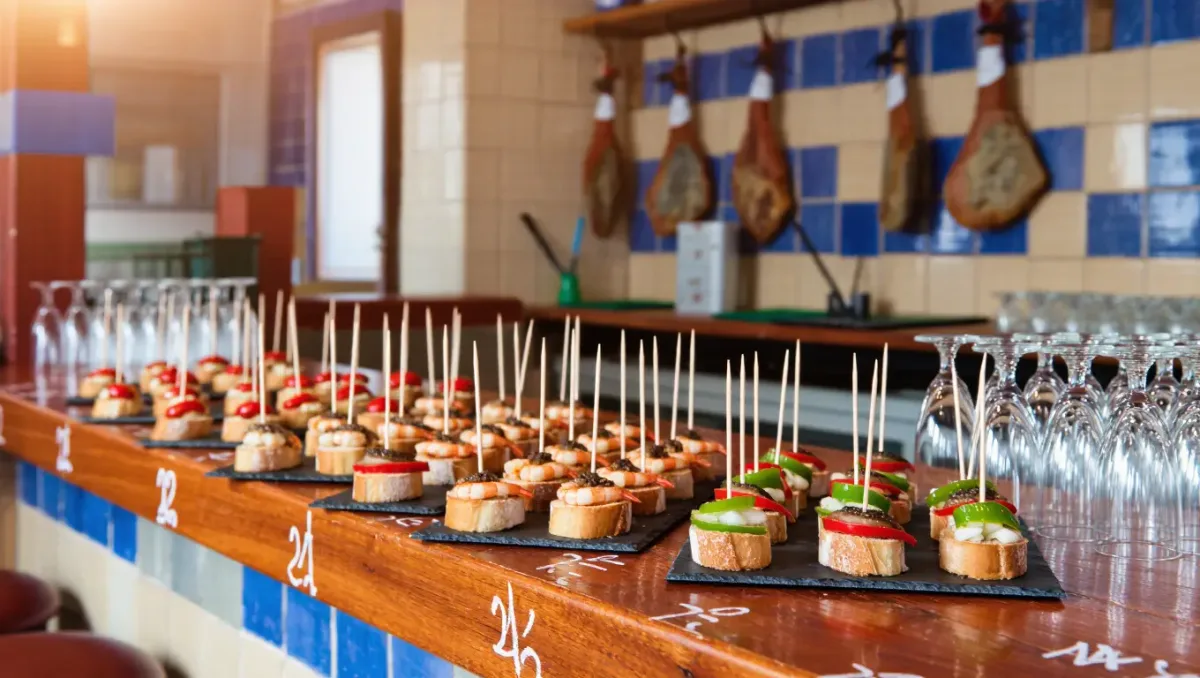
Barcelona runs two small-plate systems side by side. Tapas bars cook to order: you ask for raciones and plates, they're recorded on your tab or chalked on the counter, and you pay the total when leaving. Pintxo bars — the Basque format imported wholesale into the Old City — display finished bites on bread across the counter; you take what you want, keep the toothpicks on your plate, and the count at the end is the bill, per the custom both formats have long published on their own menus as of spring 2026.
This is a sourced etiquette explainer of the two systems' mechanics — ordering, paying, and the customs around both — for travelers who'd rather understand the room than memorize a list of bars.
Tapas: the ordered system
Spanish tapas culture in Catalonia works on deliberate ordering. A "ración" is a full plate to share; a "media ración" or "tapa" is the smaller version, and mixing both across the table is the standard strategy. The kitchen paces plates as they finish, not in a served sequence — arriving together or staggered is the system working. Ordering vocabulary that matters: "para compartir" (to share) sets expectations, and asking what's good today beats any fixed list because tapas menus track the market. Payment: the bar records your order, and at counter seats the tally is often chalked directly on the wood — the chalk lines are your bill, not graffiti.
Pintxos: the counter-grazing system
The pintxo bar inverts the flow: everything is already made, laid out on trays across the counter. You take a plate, collect bites — spiked with toothpicks, which is the whole accounting system — and the server counts skewers at the end, charging per pintxo, commonly in the two-to-four-euro band at ordinary bars. Hot pintxos are ordered from the kitchen separately and arrive fresh. The custom that matters: plates of toothpicks stay at your spot, because tossing them is how people accidentally underpay or argue a bill.
Related stories: Tipping in the United States: who gets what, and when it isn't optional · OpenTable, Resy, and Tock: how restaurant reservation systems actually work.
The local rhythm: bar-hopping, not sitting down
Both systems assume movement. The Catalan and Basque custom is "de tapeo" — one or two plates and a drink here, then walk to the next bar — which is why tapas bars rarely have comfortable seating and why lingering over one big meal at a tapas bar marks you as a visitor. Dinner starts late by northern-European clocks: kitchens commonly open for dinner around 8:30–9 p.m., and a bar full at 9 may be finishing lunch-style pintxos rather than serving dinner. The practical visitor pattern — pintxo crawl through a handful of bars in the Old City — is not a tourist invention; it's the format's native use.
Paying: at the bar, at the end
In both systems you typically pay when leaving, either at your table or at the register, with the toothpick count or chalk tally as the record. Card payments are normal now across Barcelona bars, but small counter-only bars still prefer cash for bills under ten euros. Tipping follows the Spanish norm: round up or leave small change — a euro or two is a full gesture; there is no percentage expectation and service is included in prices by law.
The confusion that catches visitors
- Sitting at a table often costs more than eating at the counter in bars that price differently by location — the posted menu says so.
- Free "tapa with your drink" is an Andalusian and northern custom, not a Barcelona universal; don't expect the beer to come with food attached.
- Grabbing pintxos with your fingers is correct; forks at pintxo bars are for the hot plates, and the same toothpick goes back on your plate, not the tray.
FAQ
How does the toothpick bill work at pintxo bars?
Every pintxo has a toothpick; keep them on your plate, and the server counts them at the end — typically two to four euros each at ordinary bars.
What's the difference between a tapa and a ración?
A ración is a full sharing plate; a tapa or media ración is the small version. Mixing sizes across several plates is the standard table strategy.
Do you tip in Barcelona tapas bars?
Round up or leave a euro or two for good service. Service is included in prices by law, and no percentage is expected.
What time do people eat dinner in Barcelona?
Late by most visitors' clocks — kitchens generally open for dinner around 8:30–9 p.m., and bar-hopping before then is the pintxo format working as designed.