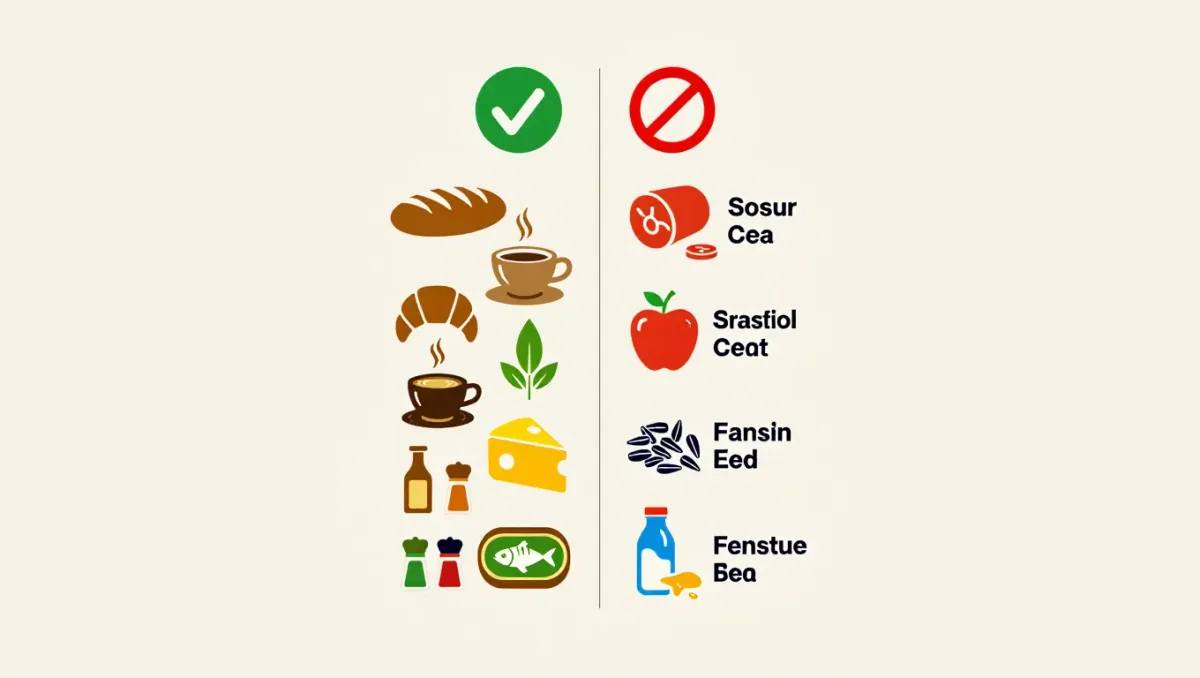
The short version for the suitcase home: commercially packaged, shelf-stable foods — baked goods, candy, condiments, coffee, tea, dried pasta, most hard cheeses — enter the United States with no drama. Fresh fruit and most vegetables are prohibited or restricted, and meat products are the hardest line of all: sausages, salami, jerky, pâté, and broths from abroad are the confiscations that make the arrivals-hall stories. The rule that protects you through everything is one word: declare. Declared food that fails inspection is simply taken; undeclared food that is found is a penalty of hundreds of dollars and a permanent ding on your record.
This is a sourced roundup based on US Customs and Border Protection and USDA agricultural import rules as of mid-2026; the detailed tables shift with disease outbreaks and pest concerns, so check the official pages for your specific items before you shop. Information, not legal advice.
What is reliably allowed?
The pantry shelf, basically. Baked goods — cookies, cakes, breads — without meat filling. Processed and commercially sealed foods: candy, chocolate, jam, honey, olive oil, mustard, sauces. Coffee of any roast, tea, dry spices, and dried fruits. Most cheeses make it, with the working rule that hard, fully cured cheeses from approved countries pass easily while soft, fresh, or raw-milk varieties sit closer to the line, and anything containing meat is out of the cheese conversation entirely. Canned fish — the Portuguese sardine tins, the Scandinavian preserved-everything — is generally fine. Commercial packaging and ingredient labels in a readable alphabet are the traveler's best friends, because the inspector's decision runs on what the product demonstrably is.
What is reliably prohibited?
Meat, nearly always: fresh, dried, cured, canned, or in soup form — pork products especially, for disease-control reasons that vary by outbreak. Most fresh fruits and vegetables, whose pest risk is the whole reason the agricultural inspections exist, with a shifting list of exceptions by country and item. Seeds and most live plants without permits. Unpasteurized dairy sits restricted. Rice is restricted from many origins for pest contamination. The honest summary: if it grew in the ground or walked on it recently, assume no until the official table says yes — and note that the tables are item-by-country, which is why 'my friend brought some back' is not evidence.
Related stories: Renting a car in Europe for the first time: the manual, the vignette, and the excess · Paris métro tickets in 2026: what to buy, what the paper carnet left behind.
How does declaration actually work?
The customs declaration asks whether you are bringing food, plants, or animal products, and the truthful answer for nearly every traveler returning from a food-loving trip is yes — chocolate counts, tea counts, the hotel's jam sachets count. Declare at the kiosk, keep the items accessible, and let the inspector sort the list: a declared item that is prohibited is confiscated at the counter with no penalty, while an undeclared item found in a bag — agricultural inspections run beagles and X-rays for exactly this — draws civil penalties that start in the hundreds of dollars. The asymmetry is the entire strategy: declaring is free insurance against a fine.
Why are the rules this strict?
One agricultural outbreak justifies years of inspections: a single fruit fly or foot-and-mouth introduction can cost the farming economy billions, which is why the agricultural arm of customs operates with its own officers, its own dogs, and its own tables of permitted origins. The system is not anti-food; it is anti-pest-and-pathogen, and it updates in real time — an avian or swine disease outbreak in your departure country can move items from the gray zone to prohibited between your purchase and your landing.
- Declare every food item — the word covers chocolate, tea, and jam.
- Safe bets: baked goods, candy, coffee, tea, condiments, hard cheese, canned fish.
- Hard line: meat in any form, most fresh produce, seeds, unpasteurized dairy.
- Declared prohibitions are confiscated free; undeclared ones are fined.
- Check the item-by-country tables before you buy, not at the airport.
The beagle at baggage claim is not a mascot. It is the most accurate detector in the terminal, and it has never once cared about your explanation.
Souvenir economics change once the border enters the math: the $40 wheel of raw-milk farm cheese is a bad bet against confiscation, while the $8 tin of sardines lost to a strict inspection is a rounding error. Experienced food travelers plan the haul around the safe list, buy the risky delicacies to eat in the country — the last night of a trip is what farmhouse cheeses are for — and reserve suitcase space for the items that cross borders legally. It is the same packing logic as liquids, one level up: the rule exists, it is public, and it is enforced by dogs who do not read excuses.
Who should ship instead of carry?
Nobody sending meat, and anyone mailing food should know that mailed packages face the same tables with the same prohibitions — the border applies at the sorting facility, not the airport. For genuinely problematic but legal items, specialized food importers handle permits; for everything on the safe list, the suitcase is simpler, and the customs form's honesty is the entire toll. The travelers who get stories out of this process are, without exception, the ones who skipped the word "yes" on the food question.