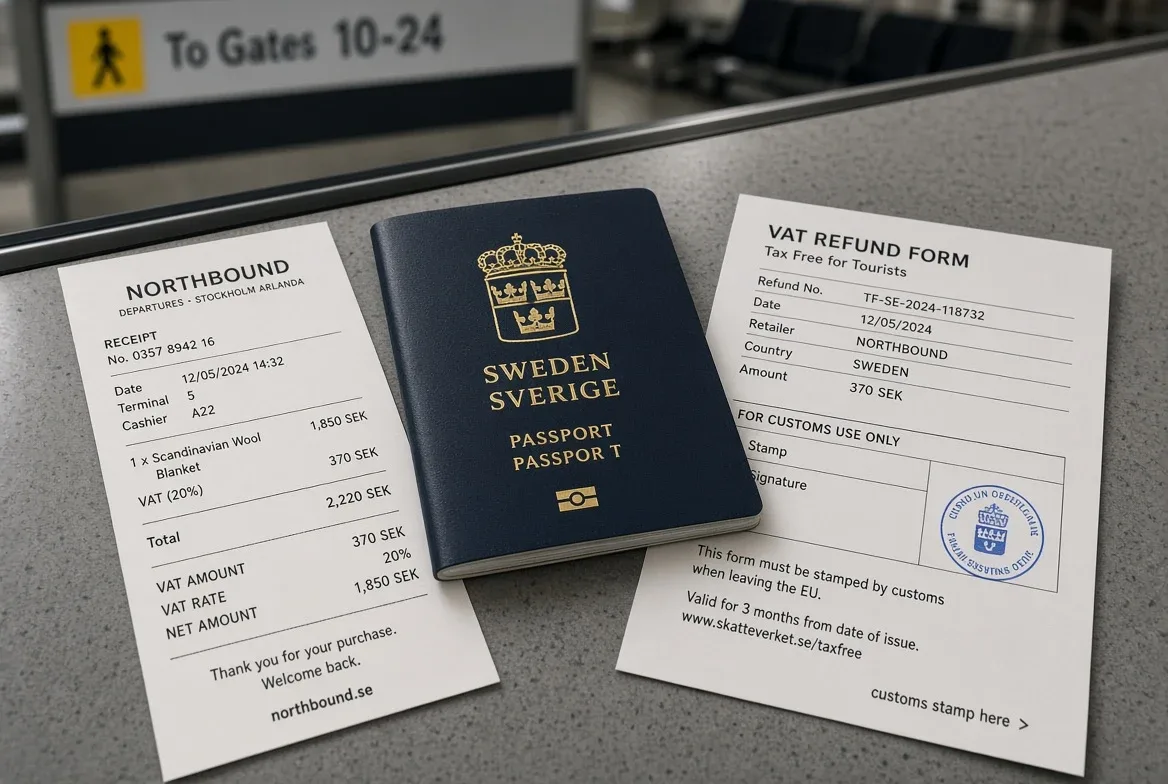
If a shop in the EU offers you a VAT refund form, you're entitled to claim it as a non-EU resident as long as you show the goods and paperwork to customs when you leave, within three months of buying them — the catch is that the minimum purchase amount, the paperwork, and the deadline differ by country, and most of the refund gets eaten by fees or missed entirely because travelers skip the customs step.
Value-added tax is baked into the sticker price across the EU, usually somewhere between 17% and 27% depending on the country. Non-residents can get part of it back on goods they're taking home unused, but the process is not run by the EU as one system — it's handled country by country, often through private refund operators, which is why the experience varies so much between, say, Paris and Vienna.
Do you even qualify?
You need to live outside the EU, and the goods have to leave the EU in your luggage — not shipped, not left with a hotel, not used before departure. Some countries set a minimum spend and some don't; the European Commission's official guidance notes that thresholds vary by member state and are not harmonized EU-wide, so what qualifies in one country may not in the next.
France sets its threshold at more than 100 euros including tax, in the same store, on the same day — that's been the rule since January 2021, according to French customs. Austria's finance ministry puts its own minimum at over 75 euros invoiced. Belgium's threshold is lower still, around 50 euros, and Spain doesn't require a minimum at all. In practice, that means a single souvenir usually won't qualify, but stacking purchases at one store on one visit often will.
What happens at the register
Ask for the refund form when you pay — not after. The shop staples or prints your refund voucher to the receipt, and you'll need your passport on hand since the form is tied to your travel document. Some retailers only participate through a specific refund operator (Global Blue and Planet are the two most common across the EU), which matters later because the kiosk that pays you out usually has to match the form.
What happens at the airport
This is the step people skip, and it's the one that actually gets you the money. Before you check your bag — because customs may want to see the item, not just the receipt — you validate the export. In France, that means scanning the barcode at a PABLO terminal near the customs desk; a screen reading "OK Validated voucher" is your digital stamp, per French customs guidance. Vienna Airport has run a similar digital system, called Digital Export Validation, since September 2021, per Austria's finance ministry — you bring your invoices to the DEV desk and the system either issues an electronic exit confirmation or flags a problem on the spot.
Skip this validation and there's no refund, no matter how much you spent. It's also why packing the item in checked luggage before finding the terminal is the single most common way travelers lose the refund — you can't show customs something that's already gone through to the hold.
How you actually get paid
Once validated, refunds typically land one of two ways: cash or card refund at an airport kiosk on the spot, minus a processing fee, or a mailed confirmation if the shop already fronted you the refund and needs proof you left on time. Fee amounts aren't standardized and depend on the retailer and refund operator, so the number on the form is rarely the number you'll actually receive.
Who should skip the whole process
If your total spend at any one shop is under the local minimum, or you're checking your bag before finding the validation desk, don't bother chasing the form — the paperwork alone can cost more time than the refund is worth for a small purchase. It's also not available on services like hotels or restaurant meals, and several goods categories are excluded outright in France, including tobacco, fuel, and cultural goods.
What if you're buying at multiple stops on one trip?
Each country's threshold and deadline resets separately — a France purchase and an Austria purchase don't combine toward either country's minimum, and each has its own three-month export window measured from the purchase date. If your itinerary crosses several EU countries, keep receipts sorted by country and validate each batch before you leave the EU for good, not at each internal border.
For a related cities perspective, read How Venice's day-tripper access fee actually works (and why it's off right now).