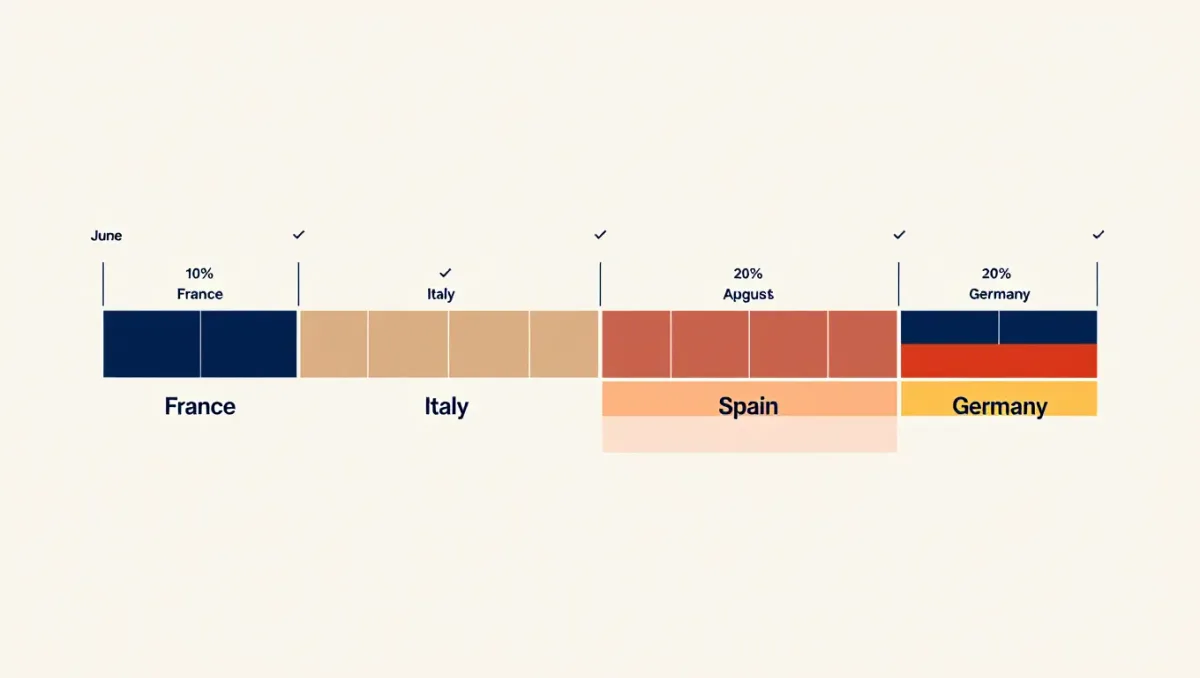
If you are timing a European trip around shopping, the short version: France's state-run summer sales typically open in late June and run about four weeks; Italy's summer sales start in early July on dates each region sets; Spain abolished its fixed calendar years ago, so discounts begin whenever stores like — often well before June ends; and Germany never regulated to begin with, with clearance storms around the July school holidays. Two weeks later in the calendar generally buys you deeper discounts and thinner racks.
This is a sourced roundup of sale-season rules and customs as they stood going into the 2026 season; exact start dates are announced annually and can shift by days, so confirm the current year's dates before you lock flights. The house disclaimer applies: information, not shopping or travel advice.
Why does France still get to tell shops when to discount?
France runs two legally defined sale windows a year — winter and summer — and outside them, advertising "soldes" is restricted. The summer window traditionally opens in the last week of June and lasts roughly four weeks, with the first week carrying full size runs and modest markdowns, and the final days carrying the deepest cuts on picked-over stock. For a traveler, the shape matters more than the date: shop early for selection, late for price, and know that a week-two visit splits the difference the way most people actually want.
The flip side of regulation is fairness: prices must have been charged at reference levels before the sale, which makes French discounting comparatively honest. Outside the windows, French shops hold prices — a July 15 sale in Paris is the sale; a May 20 "sale" is marketing with a French accent.
How does Italy split the calendar?
Italy's regions set their own sale dates, so there is no single national opening — most set summer sales to start in the first days of July, and they run into late August in much of the peninsula. Practical effect: Rome and Florence fill with August discount hunters while the French season is already closing. Milan's fashion district does a quieter version — high-end houses discount off-calendar through outlet channels, and the city's designer outlets run their own rhythms regardless of the regional decree.
Related stories: How to bargain in Istanbul's Grand Bazaar without embarrassing yourself · What is actually worth buying in airport duty-free, and what never is.
What happens in Spain and Germany?
Spain liberalized its rules in the 2010s: shops may discount when they like, and in practice discounting creeps earlier each year, with serious clearance from the second half of June and thin pickings by mid-July. Labels no longer mean much legally, so the comparison engine in your phone matters more in Madrid than in Paris. Germany never had the French model this century — seasonal clearances cluster around late June into July and again after Christmas, driven by weather and school calendars rather than law, with the mid-price chains' percentage signs appearing first.
Where do the outlet malls fit in?
Europe's designer outlets — the big clusters outside Paris, Milan, Madrid, and London — run their own discount economics year-round and add seasonal events on top. They are the right stop for last-season designer goods at any time of year, and the wrong place to experience a national sale season: their markdowns do not follow the calendar Paris set. If your trip is anchored to sale dates, budget city shopping for the regulated windows and outlet time for whatever week you actually travel.
Does the tourist VAT refund stack on top?
For non-EU residents, yes — that is the compounding that makes July shopping arithmetic interesting. Sale prices reduce the base, and the VAT refund then takes its percentage off the reduced price, subject to the shop's minimum purchase thresholds and the refund processor's cut. The mechanics are separate from the sale rules and covered in their own right elsewhere; the one-line version for calendar planning is that the final week of June in France stacks both effects if your residency qualifies.
- Late June: France opens; Spain already discounting.
- First week of July: most Italian regions open; Paris still has full size runs.
- Mid-July: both markets at full depth; racks noticeably thinned.
- Late July to August: final markdowns in France; Italy still running; picked-over is the honest description.
The sale season is a market with a lifecycle: the first week sells choice, the last week sells price, and no week sells both.
Who should ignore all of this?
Anyone whose sizes sit at the edges of European racks — sale seasons reward the well-served middle and punish everyone else, since the picked-over stock skews to common sizes. And anyone buying basics: the year-round price of a plain good trench or a white shirt differs from sale price less than a flight change fee. Time the trip for the museums; let the sales be weather, not the itinerary.