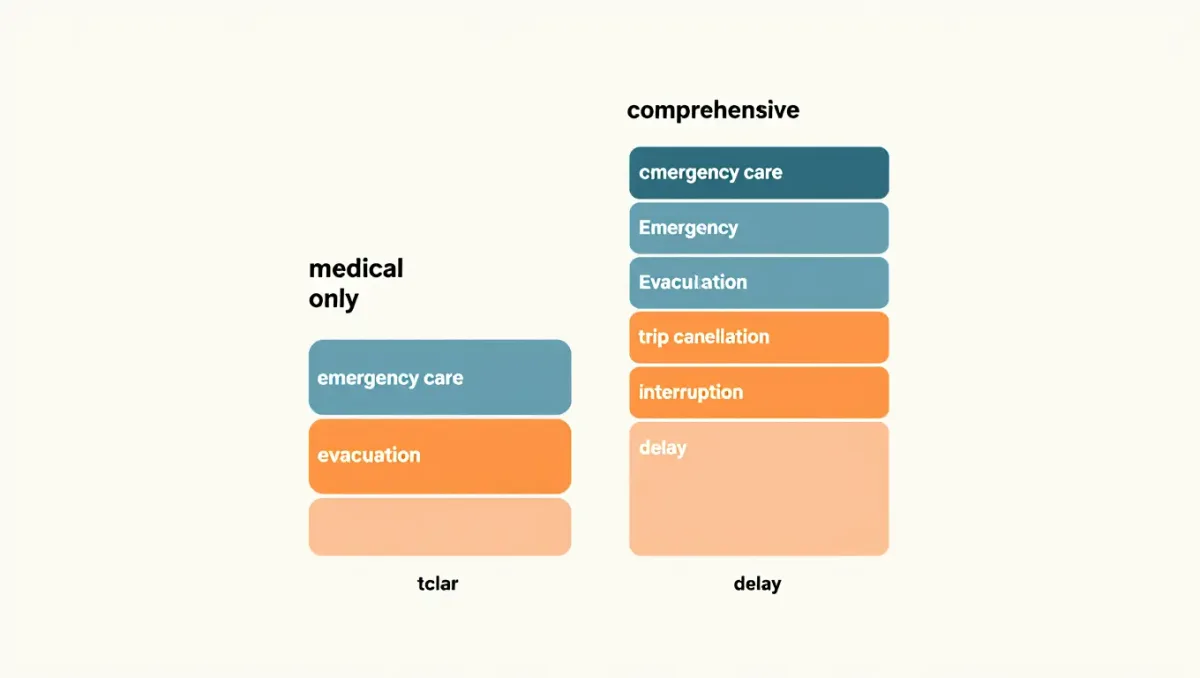
For a short, refundable trip inside your health insurance network's comfort zone, a medical-only travel policy at roughly $1 to $2 per day of coverage is usually enough. For an international trip with prepaid, nonrefundable bookings — tours, cruise cabins, safari lodges — comprehensive travel insurance is the better fit, because its cancellation and interruption benefits are the part you'd actually use. Those price bands come from published plan documents and US State Department guidance as of January 2026.
What did we compare?
Three benefit categories across both policy types: emergency medical and evacuation coverage, trip cancellation and interruption coverage, and the exclusions that most often surprise claimants. The structural difference is simple. Medical-only plans cover treatment and transport if you get sick or hurt abroad, and nothing else. Comprehensive plans bundle that medical core with cancellation, interruption, delay, and baggage benefits, which is why their premiums run several times higher for the same trip length.
What medical-only plans cover — and what they don't
A medical-only policy answers one question: what happens if you need a doctor, a hospital, or an evacuation flight in another country. That question matters more than most travelers assume, because Medicare does not pay for care outside the United States and many private US plans treat foreign hospitals as out-of-network, a gap the US State Department's travel guidance has flagged for years. Published medical-only plans commonly offer limits from $50,000 to $500,000, with evacuation benefits of $100,000 to $1,000,000.
What you don't get: any reimbursement if you cancel the trip, if a tour operator collapses, or if a missed connection costs you two resort days. For a cheap, flexible trip, that gap may not matter. For a prepaid one, it's the whole budget.
What comprehensive plans add
The cancellation and interruption benefits are the core add. Typical published comprehensive plans reimburse 50% to 100% of prepaid, nonrefundable costs for a listed set of covered reasons — illness, documented weather disruptions, and similar named perils — with "cancel for any reason" upgrades reimbursing around 50% to 75% at a premium roughly 40% to 60% higher, per plan documents published as of early 2026. Baggage and delay benefits are usually modest caps in the hundreds of dollars, not the reason to buy.
The exclusion list is where claims die: pre-existing conditions unless you buy within a waiver window after your first trip payment (often 14 to 21 days), pandemics on some older policy forms, and "fear of travel" under standard plans.
How to choose in four questions
- How much is prepaid and nonrefundable? Near zero — skip cancellation coverage. Thousands — comprehensive earns its premium.
- Does your health plan pay abroad, including evacuation? If yes and the answer is real, medical-only shrinks to evacuation-only territory. If no, the medical core is non-negotiable.
- Do you have a condition that could complicate a claim? Then the pre-existing waiver window, not the price, drives the timing of your purchase.
- Is the destination one with expensive private care — the US, Japan, Switzerland, Singapore? Medical limits should reflect local prices, not your home country's.
What about coverage from credit cards?
Some premium cards include travel cancellation or interruption coverage as a cardholder benefit, with caps and claim rules published in each card's benefit guide. Treat it as a floor, not a substitute: card benefits rarely include emergency medical or evacuation, which is the part of comprehensive coverage with the largest dollar stakes.
FAQ
Is medical-only travel insurance much cheaper?
Yes. Published medical-only plans commonly price from about $1 to $2 per day for younger travelers, while comprehensive plans for the same trip often run 4% to 8% of total trip cost.
When should I buy comprehensive coverage?
When a large share of your trip cost is prepaid and nonrefundable, when your destination's medical prices are high, or when you need the pre-existing-condition waiver window that comes with early purchase.
Does my regular health insurance work abroad?
Often partially or not at all — Medicare doesn't pay outside the US, and many private plans require upfront payment at foreign hospitals. Check your plan documents before assuming.
What is "cancel for any reason" coverage?
An upgrade on comprehensive plans that reimburses a partial share of costs regardless of cause, usually 50% to 75%, at a higher premium, with purchase deadlines shortly after your first trip payment.